About Yoga | Yoga Life Global

Category: About Yoga

Classical Yoga

What Does It Mean to Become a Classical Yoga Teacher?

Kritika Bairagi | January 30th, 2025


Yoga today comes in many forms—hot yoga, aerial yoga, goat yoga, and countless other variations. Some styles cater to specific needs, while others are fleeting trends, blooming and fading like seasonal flowers. But at the heart of all these modern adaptations lies a strong, unshakable foundation: Classical Yoga.

Classical Yoga is the deep-rooted trunk of the vast tree of yoga, nourished by thousands of years of wisdom. Unlike trend-based styles, it remains unchanged in its essence, providing a structured and holistic approach to self-realization.

When you train in Classical Yoga, you don’t just follow trends—you build a foundation so strong that you can create your own path, setting yourself apart from the crowd.


Classical Yoga is not only a form of exercise but is a comprehensive science of body, mind, and spirit. The path to enlightenment is structured based on ancient texts such as the Yoga Sutras of Patanjali and the Bhagavad Gita.

The basic principles of Classical Yoga are:

Ashtanga Yoga : The eight limbs of yoga, including right living (Yama & Niyama), posture (Asana), breath control (Pranayama), sense withdrawal (Pratyahara), concentration (Dharana), meditation (Dhyana), and final samadhi or absorption.

Disciplined way: Classical Yoga requires devotion, time, and practice in the presence of a guru.

Holistic practice: In addition to physical postures, it encompasses meditation, breathing techniques, kriyas, and diet for total well-being.

50 Online Yoga Life

Not everybody teaches Classical Yoga. If one can learn the commercialized forms of yoga in a weekend workshop, the real classical technique is rather learned in a natural sense from a master who inherits this ancient wisdom from a lineage of teachers.

Sacred knowledge passed on from generation to generation does not come free; instead, it is passed on for the integrity of its intent.

Our courses at Online Yoga Life adhere to this heavenly system. Our Guruji, Dr. Radheshyam Mishra, is born into a century-old tradition of yoga masters. With years of experience, he has dedicated himself to teaching Classical Yoga so that his students could receive knowledge in its pure form.


Many become yoga teachers, but very few become Classical Yoga Teachers. It’s all about depth of knowledge, authenticity, and the scope to transform lives through teaching.

When you do a Classical Yoga Teacher Training Course, you:

  1. Deepen your knowledge beyond just the physical postures.
  2. Learn traditional techniques in the hands of lineage-rooted experienced teachers.
  3. Develop a holistic view by understanding yogic philosophy, lifestyle, and self-discipline while being able to teach.
  4. Be a yoga teacher with a difference and teach yoga as it was originally meant to be taught.
Classical Yoga

There are so many teacher training courses offered today, so you may ask why you should choose Online Yoga Life. 

Well, the reason is simple: our program is not just another yoga certification-it is a portal to authentic Classical Yoga teachings.

Learn from a Guru with a lineage. Dr. Radheshyam Mishra brings decades of wisdom, ensuring you receive genuine, time-tested teachings.

Traditional meets modern. While staying true to classical methods, our course is designed for the modern world, making it accessible online without losing its authenticity.

Comprehensive curriculum. Our course covers not just asanas but also philosophy, breathwork, meditation, kriyas, and holistic wellness.


The choice is yours. Do you want to follow trends, or do you want to be rooted in a system that has stood the test of time?

Becoming a Classical Yoga Teacher means immersing yourself in the depths of ancient wisdom and transforming not just your own life but the lives of your students.

If you’re ready to step beyond mainstream yoga and embrace the depth of Classical Yoga, then our online teacher training course is your perfect path. Learn from the lineage, deepen your practice, and become a true torchbearer of authentic yoga.

Ready to build strong roots in yoga? Join us today and embark on your journey to becoming a Classical Yoga Teacher.


200-hour yoga

A Day in the Life of a 200-Hour Yoga Trainee

Kritika Bairagi | January 26th, 2025

Signing up for a 200-hour yoga teacher training program is more than just learning how to instruct—it’s a deeply transformative journey that reshapes your body, mind, and spirit.

Whether you opt for an immersive in-person program or the flexible online training provided by platforms like Online Yoga Life, every day is thoughtfully planned to enhance your practice and prepare you to pass on the teachings of yoga. Here’s a look at what a typical day might entail for a yoga trainee.

ALSO READ; What to Expect from a 200-Hour Yoga Teacher Training


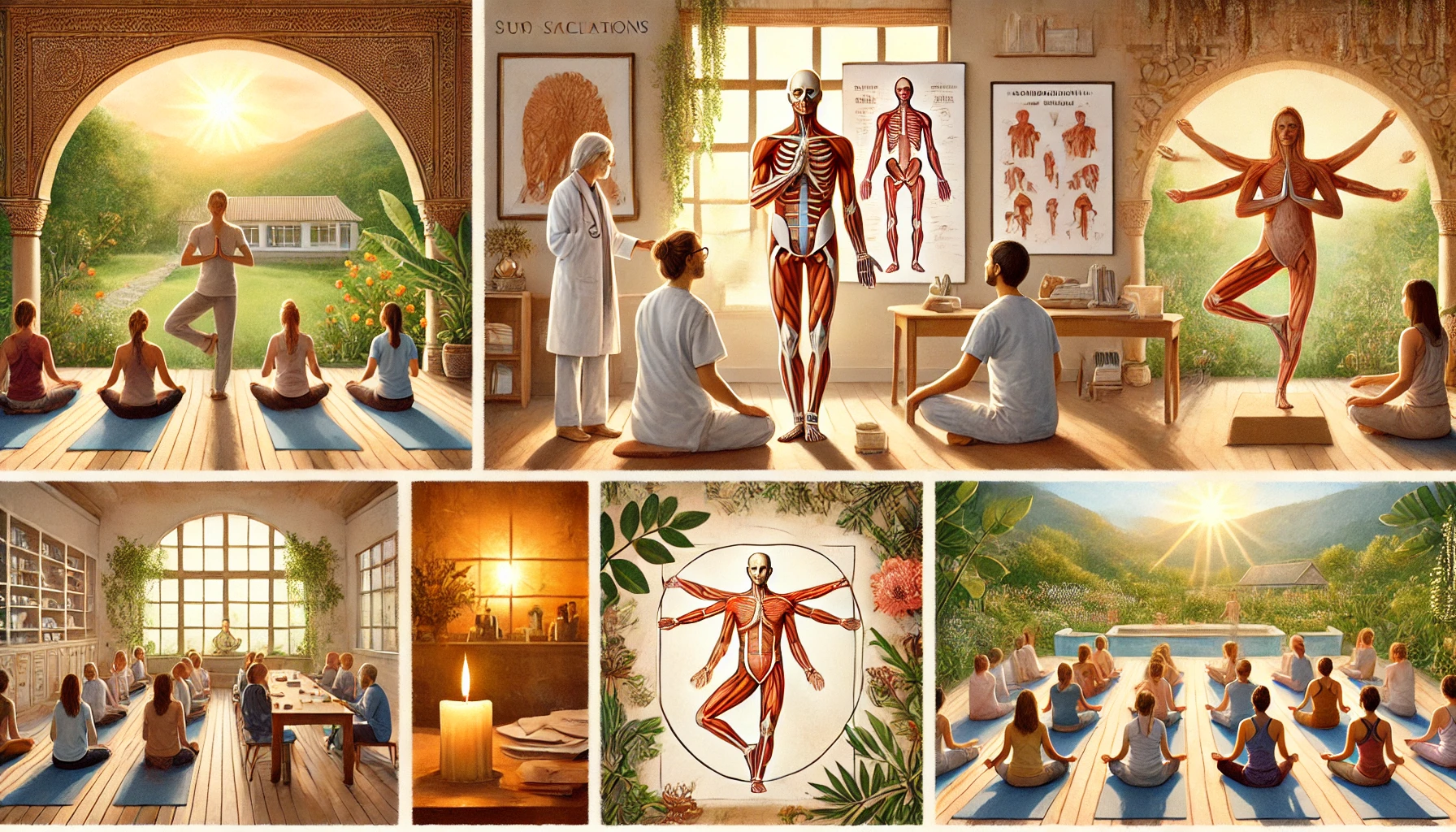
The day begins early, around 5:00 AM, during Brahma Muhurta—considered a spiritually significant time. After freshening up, trainees engage in Shatkarma (cleansing techniques) and Pranayama (breath control). These practices help detoxify the body, calm the mind, and set a focused tone for the day ahead.

Through mindful breathing, you may notice heightened senses and a quieter mind. This peaceful start fosters introspection and provides the energy needed for the day’s activities.

DALL·E 2025 01 26 20.19.43 An early morning yoga session in a serene outdoor setting with a group of yoga trainees practicing asanas in harmony. The sun is just rising casting Online Yoga Life

By 7:00 AM, it’s time for a 90-minute asana session led by experienced instructors. These sessions are designed to boost strength, flexibility, and balance, with a focus on traditional poses, their alignments, modifications, and benefits.

The practice is both challenging and nurturing. You’ll discover how breath and movement work together, a core element of understanding yoga as a blend of physical exercise and meditation.


Following the asana practice, a nutritious breakfast awaits. Meals are often sattvic, emphasizing fresh fruits, whole grains, and herbal teas to promote mental clarity and physical vitality.

This mealtime also becomes an opportunity to connect with fellow trainees, exchanging experiences and building a supportive community.


Late mornings, typically starting around 10:00 AM, are devoted to learning the theoretical foundations of yoga. These classes cover:

Yoga Philosophy: Insights from ancient texts like the Yoga Sutras of Patanjali and the Bhagavad Gita, exploring the ethical and spiritual principles of yoga.

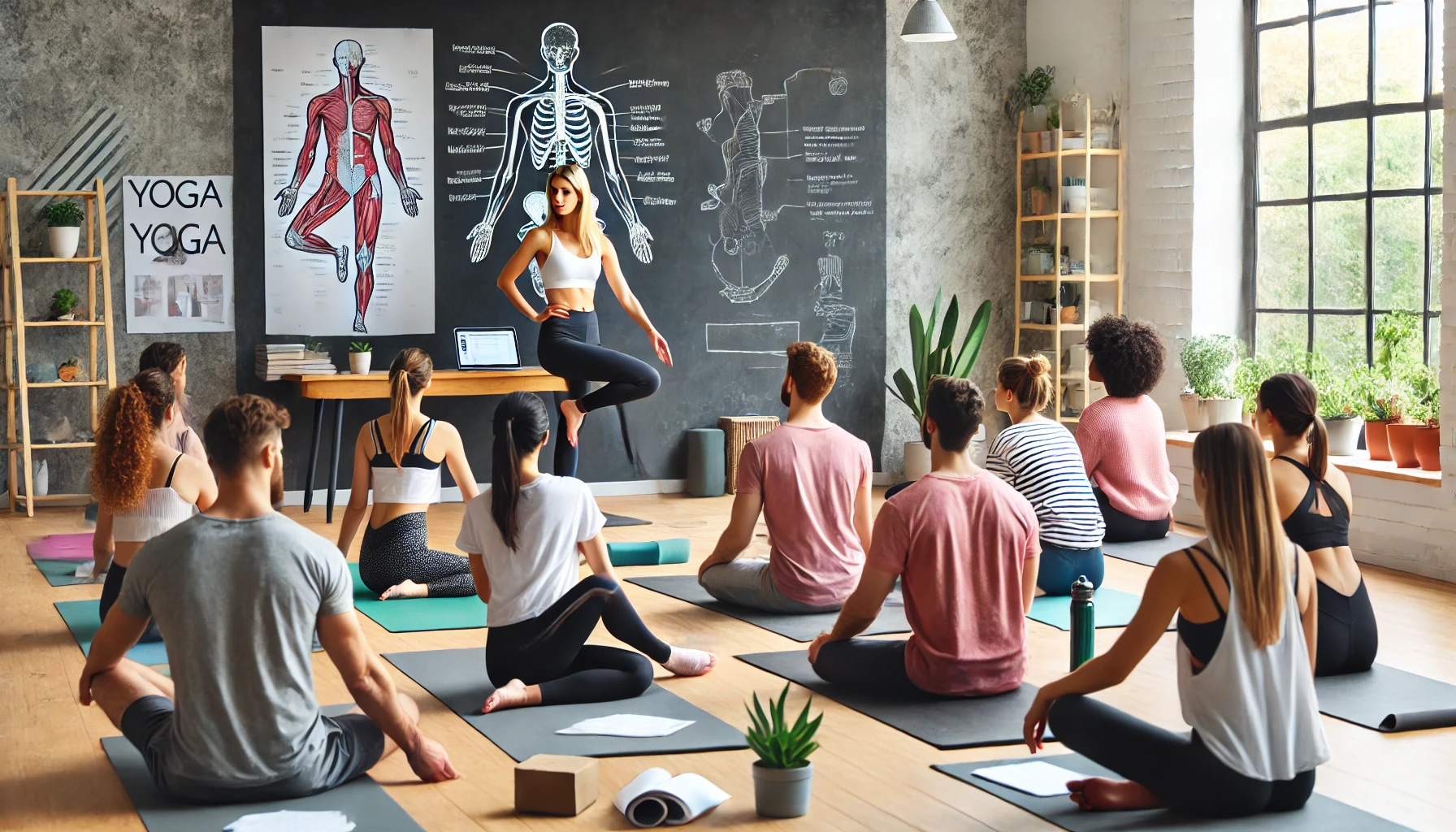
Anatomy and Physiology: Understanding the human body to teach yoga safely and effectively.

By blending philosophical and scientific perspectives, you’ll gain a well-rounded understanding of yoga’s depth and significance beyond the physical postures.


After the theory sessions, trainees enjoy a light, energizing lunch. Meals are designed to sustain your energy without making you feel sluggish. Post-lunch is usually a time for rest or self-study. Many trainees use this downtime to journal, meditate, or review what they’ve learned.


Afternoon sessions, starting around 2:00 PM, focus on teaching methodology. During this time, you’ll learn how to:

Plan and structure a yoga class.

Communicate effectively with students.

Offer modifications and adjustments to suit different skill levels.

Create welcoming, inclusive spaces for all practitioners.

Practical exercises often involve group activities where trainees practice teaching under the supervision of mentors, helping to build confidence and refine teaching skills.


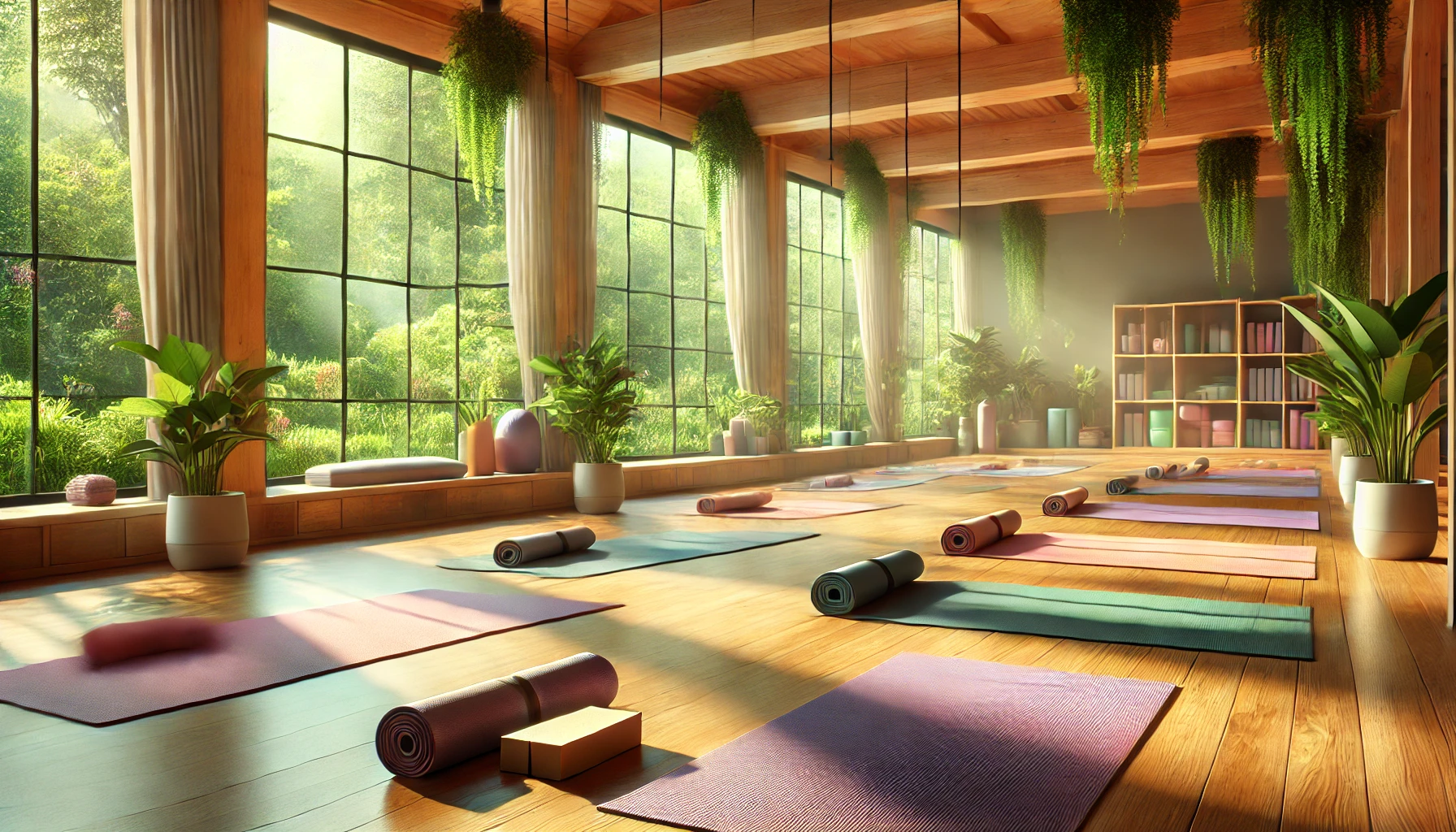
DALL·E 2025 01 26 20.19.45 A peaceful indoor yoga class with a group of trainees practicing in a bright and spacious studio. The room features wooden floors large windows letti Online Yoga Life

Around 5:30 PM, trainees gather for a calming evening session. This could include restorative Yin Yoga, guided meditation, or journaling exercises. These reflective practices encourage relaxation and help absorb the day’s teachings, fostering mindfulness—a vital quality for any yoga teacher.


Dinner, typically served early in the evening, features light sattvic dishes. Post-dinner time is yours to spend as you like—reviewing notes, studying, bonding with peers, or journaling to process the day’s experiences. These shared moments create a sense of camaraderie that enriches the training experience.


By 10:00 PM, it’s time for bed. After a day filled with physical activity, intellectual learning, and emotional growth, restorative sleep becomes essential for maintaining focus and energy throughout the course.


For those who choose online training through programs like Online Yoga Life, the daily structure remains largely the same but with added flexibility. Online training allows you to:

Schedule sessions at your convenience.

Learn from the comfort of your home.

Access recorded sessions for extra review.

While the format may differ, the focus on holistic learning and personal growth is consistent. Online trainees often benefit from personalized attention through virtual one-on-one sessions to help them stay on track.

200-HOUR YOGA

A 200-hour yoga teacher training program @onlineyogalife.com is a balanced mix of discipline, learning, and self-discovery.

From the morning Pranayama to the reflective evening meditation, every moment is carefully designed to nurture your growth as both a yogi and a teacher.

This journey not only deepens your connection to yoga but also prepares you to share its benefits with others.

Whether you’re learning in a tranquil retreat or through the flexible online courses at Online Yoga Life, each day brings you closer to becoming a knowledgeable and confident yoga instructor, ready to inspire others on their wellness journey.


200-HOUR YOGA

Master Online Yoga Teacher Training Amidst Busy Schedules

Kritika Bairagi | January 20th, 2025


We all know how busy life can get. Life can feel overwhelming when juggling work, family, social obligations, and self-care. Sometimes, finding time to focus on something new seems impossible. Becoming a certified yoga teacher may seem like nothing more than a distant dream. It’s easy to think that pursuing yoga teacher training is only for people who can take months off to travel. You might also believe it’s for those who don’t have the same responsibilities as you. But here’s the truth: online yoga teacher training (YTT) makes it possible to dive into yoga education. You can do this without completely upending your life.

If you’ve been dreaming of becoming a yoga teacher but aren’t sure how to fit it into your already-packed schedule, this blog is for you. Let’s explore how online YTT can work seamlessly with your busy life and why it might be the perfect solution for you.


One of the biggest reasons people hesitate to enroll in a traditional yoga teacher training program is the time commitment. Attending in-person training often means taking time off work, arranging childcare, and working around rigid schedules. And let’s face it—life doesn’t stop just because you’ve decided to dive into yoga.

This is where online YTT shines. The beauty of online training is that you get to decide when and how you learn. Are you a morning person who wants to start your day with a 30-minute asana practice? Or maybe you’re a night owl who loves to unwind with a meditation after a long day of meetings? With online YTT, you can work with a schedule that’s tailored to your life—not someone else’s.

You can break up your lessons into manageable chunks, doing a little each day or dedicating a few hours on weekends. The flexibility is completely in your hands.


We all know how tiring it can be to commute, especially if you live in a busy city or have to drive a long way to get to your yoga studio. That time spent in traffic or on public transport could be better spent practicing yoga or relaxing at home. Online YTT removes this stress completely.

With a laptop, tablet, or even your phone, you can access your training materials wherever you are. Be it the comfort of your living room, a quiet spot at your local café, or even your backyard, the world becomes your classroom. You get to skip the commute and dive straight into your practice, all while enjoying the comfort of your own space.

online yoga teacher training, online ytt

Yoga is not something you do on the mat; it’s about finding your balance in life. If you are already handling a lot of things, it might be very overwhelming to consider adding something to your list. The beauty of online yoga teacher training is that it allows you to incorporate yoga into your routine gently, with no pressure at all.

You can start the day with a quick breathwork session before your morning coffee, or take a 15-minute asana break between meetings to stretch out your body. You can bring yoga into your life, step by step, and it does not have to be a big, disruptive thing. Over time, you’ll notice how it begins to shift your mindset, bringing more balance and calm to your day.

The key here is consistency, and online training makes it easier to create that routine in a way that works for you.


A prevalent concern about doing online training is that it’s going to feel isolating. You may fear that you will miss the opportunities for personal connection with in-person training, or it will be a solo journey of figuring everything out. Here’s the good news: all online YTT programs are organized to be supportive, engaging, and full of resources.

For instance, at OnlineYogaLife.com, you will find a community of like-minded people who are also on their yoga journeys. You will get one-on-one feedback from experienced instructors who care about your growth. You can ask questions, join live calls, and participate in community discussions. The support does not stop once you finish your lesson; you are encouraged to interact with fellow students and teachers throughout your journey.

It is all about making a community—one that transcends the virtual classroom and provides space to grow as well as relate to.

online yoga teacher training

With traditional teacher training programs, you might be worried about not being able to keep up with the group’s pace. You are then going to add stress you really do not need, especially when you are balancing a heavy work life or family obligations. Online YTT offers you freedom in your learning at your own speed.

Whether you want to take a deep dive into anatomy or revisit your meditation practice a few times before moving on, you have the time and space to really absorb the material. Life happens, and if you need to slow down for a week or take a break to focus on other priorities, that’s completely okay. Online training affords you the freedom to learn in your own terms, with no fear of losing out or lagging behind others.


We do know that training as a yoga teacher isn’t the cheapest endeavor. With traveling, accommodations, and studio fees, it certainly can be costly at times. Online YTTs tend to be cheaper since so many of the above-mentioned added expenses are waived. You aren’t paying for travel, meals, or even a place to stay, and many programs also have tiered pricing for budget-conscious yogis.

Affordable also does not equate to shoddy work. Our online programs ensure quality education by an experienced instructor. The saving here is what creates ease in getting into the teaching of yoga to secure your future without too much strain on finances.

online yoga teacher training

Yoga isn’t just a practice; it is a lifestyle, and now one can have a profession around this way of life fitting into your prior commitments. From teaching part time to hosting your own online classes or leading retreats, this flexibility will bring endless opportunities.

Maybe you want to teach a few online classes in the evening after work or private sessions over the weekend. With online YTT, you have the freedom to craft your teaching schedule based on what works for you. No need to sacrifice your work-life balance to pursue your passion. You can grow into a yoga teacher while still maintaining the life you’ve worked hard to build.


Online yoga teacher training will not only prepare you to teach yoga but also expose you to various technologies that are fast becoming the norm in today’s teaching world. You will learn how to create video content. You will also learn how to host online classes. Perhaps, you will even run virtual workshops. These are all very valuable skills in our increasingly digital world. So, by the end of your training, you will feel confident to present yourself inside and outside the digital teaching arena, therefore opening even more opportunities for you to share your passion with a global community.


Online yoga teacher training offers you the opportunity to pursue your passion while still honoring your busy lifestyle. It allows you to learn at your own pace, on your own schedule, and from wherever you feel most comfortable. With personalized support, flexibility, and a welcoming community, you’ll have everything you need to succeed.

So, what is holding you back? You don’t have to wait for the “perfect time” to begin your yoga teacher training. With online YTT, the perfect time is now-and it fits right into your life.

We would love to hear your thoughts. Do you consider online yoga teacher training, and do you have questions about how it works? Kindly comment below with your thoughts or questions!

Yogalife Ashram Barazil Online Yoga Life

hormonal imbalance, yoga

Curing Hormonal Imbalance in Women through Yoga: A Natural Path to Balance

Kritika Bairagi | January 17th, 2025


Hormonal imbalance is one of the most common problems women face at various stages of life. Hormonal changes take place from adolescence to menopause, and sometimes during pregnancy or after delivery. It affects a woman’s physical as well as her emotional life. The most common symptoms include fatigue, mood swings, weight gain, irregular periods, and sleep disturbances, which make it difficult to face daily life. While medical treatments are often needed, yoga can be a strong, natural tool to treat and even cure hormonal imbalances. Bringing your body back into harmony through the practice of yoga can reduce the impact of hormonal disruptions and help restore balance.

Hormones regulate so many functions of the body: metabolism, mood, reproduction, and energy. A small variation in hormone levels can cause considerable symptoms. Some factors that affect hormonal balance are stress, diet, lifestyle choices, and exposure to environmental toxins. Even though modern medicine has its intervention methods, more women are embracing holistic practices like yoga to achieve hormonal balance in a natural manner.


Yoga is more than just a way to stretch and be flexible. It’s an all-round practice that integrates the body, mind, and spirit. It is achieved through focusing on breathwork, movement, and mindfulness, thus working at different levels for the support of hormonal health.

hormonal imbalance

Here’s how yoga can help cure hormonal imbalances in women:


One of the main contributors to hormonal imbalance is stress. Cortisol is a hormone that your body produces when you are stressed out, which helps you to overcome short-term problems. Chronic stress, however keeps cortisol levels in the body at elevated levels, disrupting the balance of other hormones in the body, including estrogen, progesterone, and thyroid hormones. High cortisol levels may trigger a number of symptoms, including weight gain, insomnia, and anxiety.

This is one of the most important uses of Yoga to reduce stress: ‘The Stress Reducer.’ Regular deep breathing practice (‘pranayama’) and gentle movements stimulate the parasympathetic system that lets everything ‘rest and digest.’ This reduces cortisol production, letting your body return to a state of calm. Do this by including regular sessions of practice in your lifestyle to bring down your overall stress levels to maintain the right working of hormones.


Healthy blood circulation allows for the dispersion of hormones across the body. Most of the asanas that help increase the blood flow through the body, into the organs like the reproductive, liver, and thyroid. All these have an important function in the generation and regulation of hormones. Many of the poses forward folds, twists, and some of the inverted postures that will improve blood flow to the pelvic region for healthy ovaries and uterus.

Other yoga poses cleanse the body by stimulating the liver and lymphatic system. The liver breaks down hormones and metabolizes them; when it is working at its best, your body can balance hormones better. As the body releases toxins and improves circulation, the endocrine system, which produces hormones, works more efficiently.


The nervous system is also very closely connected to the endocrine system. An imbalance of the nervous system may cause disruptions in hormones. Yoga can restore the balance in the nervous system, and it induces relaxation and less overactivity in the nervous system. Deep breathing used in yoga can help balance the autonomic nervous system, controlling the production and release of hormones.

Breathing exercises can also help reduce the levels of anxiety and improve concentration, which, in turn, contributes to hormonal health. As the mind becomes calm, so does the body, encouraging it to maintain natural hormonal balance.


The thyroid and adrenal glands regulate a lot, including metabolism to the response against stress. Dysregulation at these glands might be the basis of weight gain, fatigue, and mood alterations. Yoga exercises focusing on the region where the thyroid lies, close to the throat, and that involve the adrenal glands located above the kidneys can promote stimulation and support these regions.

Some of the poses are particularly helpful in stimulating the thyroid and adrenal glands, like Cobra (Bhujangasana) and Shoulder Stand (Sarvangasana). If you regularly practice these, you can enhance the better functioning of these key hormone-regulating glands.


Yoga is very renowned for its health benefits to support women’s reproductive health. Specific poses that have the ability to increase blood circulation to the pelvic region and can stimulate the ovaries and uterus stimulate the reproductive system, thus stabilizing the estrogen-progesterone balance, important hormones in regulating fertility. A few of such poses include Butterfly Pose (Baddha Konasana), Child’s Pose (Balasana), and Warrior II (Virabhadrasana II) that improve ovarian and uterine circulation.

For women trying to conceive, yoga can offer physical benefits by improving flexibility, reducing stress, and enhancing circulation to the reproductive organs. Additionally, the mindful aspect of yoga can help regulate emotions and reduce anxiety, which can play a critical role in fertility.

hormonal imbalance


Now that we know how yoga can support hormonal health, let’s take a closer look at some specific yoga poses that can help balance hormones and cure imbalances:

Cobra Pose (Bhujangasana)
Cobra Pose stimulates the thyroid gland and is associated with the regulation of metabolism and energy levels. It opens the chest cavity and strengthens the spine, so it helps eliminate tension and stress. Cobra Pose improves blood flow and stimulates the thyroid, making it a good pose to balance thyroid hormones and increase general energy.

Shoulder Stand (Sarvangasana)
Shoulder Stand is described as the “queen of asanas” because of its benefits to hormonal health. The inversion pose excites circulation, thyroid gland, adrenal glands, and reproductive organs, and also stimulates the parasympathetic nervous system that lowers cortisol and assists in relaxation. If you are dealing with stress-related hormonal issues, Shoulder Stand may be a game-changer.

Child’s Pose (Balasana)
Child’s Pose is a restorative pose, where the body gets to rest and release all tension. By lightly pressing the abdomen into the thighs, it allows relaxation in the pelvic area and helps regulate reproductive hormones. It is also a great pose to calm the mind and stress levels, which will have a direct impact on hormonal regulation.

Butterfly Pose (Baddha Konasana)
This seated pose targets the inner thighs, groin, and hips while improving blood circulation to the pelvic region. Butterfly Pose can help relieve tension in the reproductive organs and support healthy estrogen and progesterone levels. It’s also great for improving flexibility and releasing emotional tension stored in the hips.

Warrior II (Virabhadrasana II)
Warrior II is a strong standing pose that strengthens the legs, improves balance, and stimulates the adrenal glands. Since the adrenals are responsible for producing cortisol and other hormones, practicing Warrior II regularly can help maintain a healthy stress response and support hormonal balance.

Legs Up the Wall (Viparita Karani)
This restorative inversion pose is great to reduce stress and improve circulation. Lifting the legs up against the wall increases blood flow in the lower body, which will assist in regulating hormones in the reproductive system. This pose is a wonderful way to unwind and reduce anxiety, which is important for hormone balance.


Breathing techniques are also one of the wonderful ways to make your yoga routine balance your hormones. Here are two techniques to be followed:
Nadi Shodhana, or Alternate Nostril Breathing: This one calms the mind, reduces stress, and brings the nervous system into balance. The act of alternating nostrils helps to align the left and right sides of the brain, resulting in overall hormonal balance.

Ujjayi Breathing (Victorious Breath): This deep, steady breathing technique helps regulate the body’s energy and promotes relaxation. It can be particularly helpful in balancing the thyroid and adrenal glands, supporting your body’s hormonal health.

50 Online Yoga Life


Through the curative process of hormonal imbalance in women, the practice of yoga provides a holistic and natural restoration of balance and well-being. With the implementation of yoga into your daily activities, you would be able to reduce stress levels, improve circulation, support your reproductive health, and hence regain control over your hormones. Regardless of whether it is PMS, fertility problems, menopause, or general hormonal disorder, yoga serves as a soft yet effective remedy for healing and restoring harmony within the body.

Yoga, therefore, should be consistent. The more one practices yoga, the more benefits of this ancient art one is able to derive. So roll out your mat, take a deep breath and let yoga guide you on your way to hormonal balance. For learning more such yoga techniques do visit our courses at onlineyogalife.com! Namaste!


yoga in virtual reality

Exploring Yoga in Virtual Reality: Immersive Paths to Deep Relaxation

Kritika Bairagi | January 16th, 2025


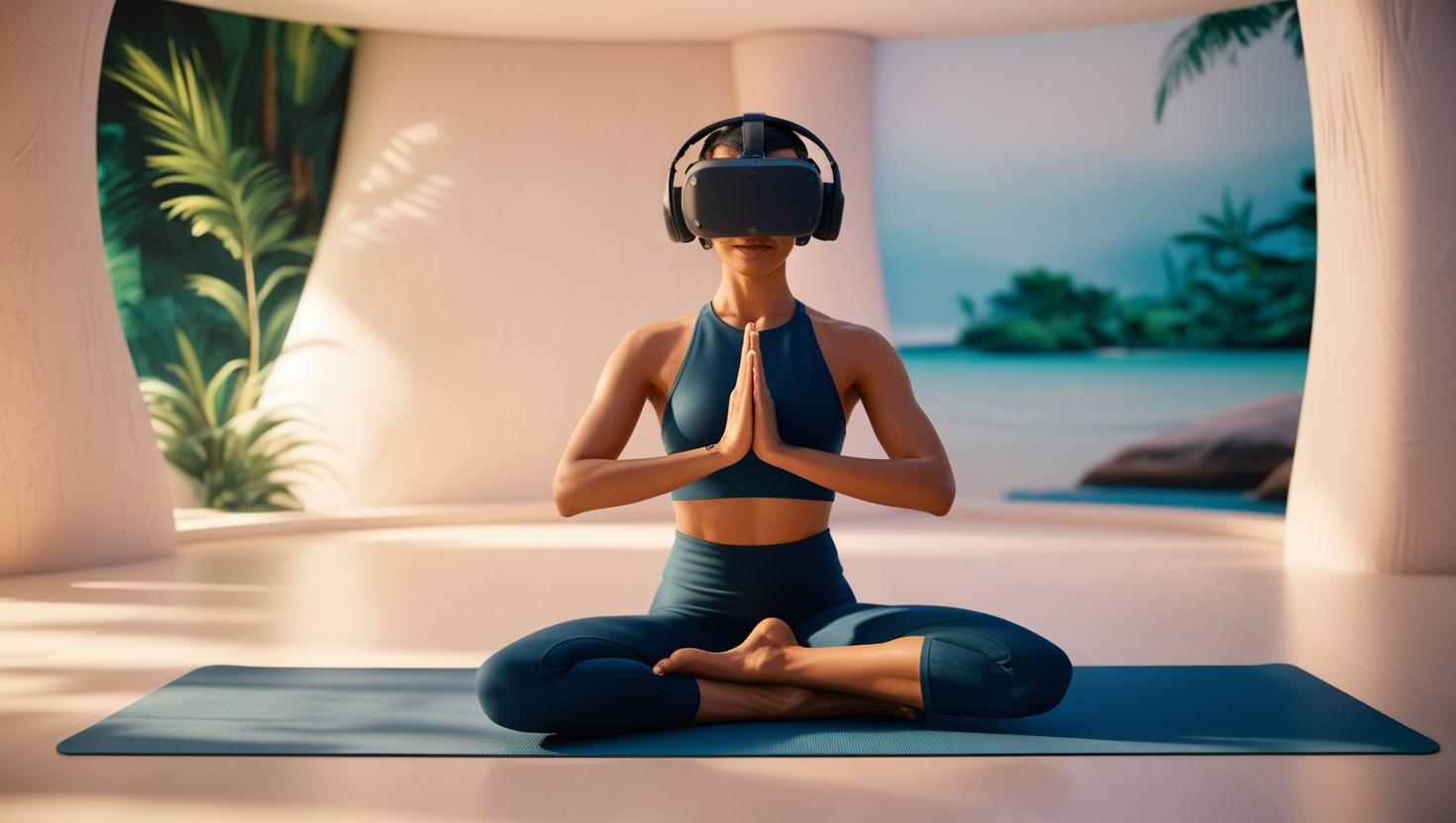
Imagine a world where you can practice yoga from the comfort of your own home, yet still feel like you’re in a serene, tranquil space—a sunlit beach, a peaceful forest, or even atop a mountain. Just imagine: Being completely immersed in a yoga experience, not only by the sounds of nature, but also through visuals and textures that surround you, enhancing how you connect to your body, mind, and breath. That’s the promise of the combination of Yoga in Virtual Reality (VR)—ancient practice combined with the cutting-edge of technology to create an immersive environment for deep relaxation, focus, and well-being.

At OnlineYogaLife.com, we believe that innovation power will make yoga better. This is the introduction of Yoga in Virtual Reality; yoga is going to a new dimension, enabling practitioners to use it in their own unique ways to deepen the practice and to get to even greater levels of mindfulness. So, let’s dive into how VR is transforming yoga and how you can apply this technology in finding relaxation and balance in your practice.


Before going any deeper into how virtual reality applies in the realm of yoga, let’s make a step for the lay person and briefly know what Virtual Reality is. Primarily, virtual reality is this technology that engulfs individuals within a synthetic digital environment by simulating and giving the effects of a real or imaginary setting. Utilizing these head-mounted devices lets consumers experience an idea as if really present there by exploring or experiencing those synthetic or imaginary places within that space of simulation.

For instance, when you put on a VR headset, you may find yourself transported to a beach at sunset, or perhaps a forest with the sound of birds chirping in the background. The experience feels real, even though you’re still in your living room. This is the power of VR—the ability to transport your senses and mind into another reality.


The beauty of yoga lies in its ability to create mindfulness, self-awareness, and inner peace through movement, breathing, and meditation. It has always been about being fully present-on the breath, the body, and the mind. However, the reality of modern life is not that simple: there are so many distractions to prevent the development of that deep sense of presence.

Enter Yoga in Virtual Reality. Virtual reality, therefore, is an immersion that will block distractions and instead envelop practitioners in environments conducive to a focused yet serene space to practice yoga. Imagine hearing ocean waves while proceeding to practice a soft flow, or meditating in the sun-dappled forest with the scents of pine trees (an inclusion of sensory elements). VR enhances the yoga experience by helping to create a tranquil, uninterrupted environment that promotes deep relaxation and mindfulness.

Think of it like this: yoga is like a garden, where the poses and breath work are the flowers and plants you’re nurturing. Virtual Reality is the garden gate—it opens up the potential for a more peaceful and distraction-free space, allowing your practice to bloom more fully.

yoga therapist training a student 1 Online Yoga Life

As yoga evolves and becomes a part of modern times, it presents a way to dive deeper into your practice and reach new levels of relaxation. Here are some of the ways Virtual Reality can benefit your yoga journey:

1. A More Immersive Meditation Experience

The quieting of the mind and a reduction of stress and a state of being well emotionally can be achieved with the help of meditation, but distractions in a form of noisiness and messy space create difficulty in entering into a deeper level of meditation. VR helps you get out of these kinds of distractions.

With VR meditation experiences, you can practice mindfulness while being immersed in soothing landscapes. You could be meditating by a calm lake, under a starry sky, or in the middle of a serene forest. The calming visuals, combined with binaural sounds and ambient noise, help to deepen your concentration and create a truly immersive state of calm. This allows you to meditate deeper and feel a sense of connection while disengaging from the outer world, focusing only on your breath and your mind.

2. Improved Concentration and Awareness

In a traditional yoga class, the instructor guides you through each pose, encouraging you to focus on your body and breath. But in today’s world, distractions are everywhere—smartphones, noisy neighbors, work commitments. Sometimes it can be difficult to fully immerse yourself in your practice.

The experience is completely different with VR yoga. Once you put on the headset, you’re transported to a space where distractions are virtually eliminated. Whether you’re practicing in a virtual ocean-side yoga studio or atop a scenic mountain, the immersive environment promotes a heightened sense of presence and focus. The more immersive the surroundings, the easier it is to tune into your breath and become one with your practice.

3. Stress Relief and Deep Relaxation

Virtual reality in yoga adds an element of enhanced relaxation for lessening stress levels. Whether in gentle restorative poses, deep breathing exercises, or meditation, VR helps the mind and body release tension and drop into the calming state.

The virtual environments for yoga in VR often include ambient music, calming nature sounds, and visual elements that promote relaxation. These stimuli work synergistically with your yoga practice to lower stress, reduce anxiety, and promote feelings of well-being. When you combine these sensory cues with yoga’s already calming effects, the result is an even more profound sense of peace and relaxation.

The body and mind in a deep restorative practice lay immersed in a virtual rainforest in Savasana (corpse pose). There are noises of rain showers and birds in the background; such sensory experiences soothe and help relax completely. Thus, practicing such yoga might help in deep relaxation, the benefit of which could be extracted.

4. Greater Ease for Yogis

The most obvious benefit of using Yoga and Virtual Reality together is the accessibility. There is nothing more fabulous than the ability to increase the accessibility of yoga for all practitioners, especially those living in areas where yoga classes are scarce, or individuals who may feel self-conscious practicing in a group setting. VR offers a way to practice yoga in the comfort and privacy of your own home.

The best part is that VR yoga can be tailored to your needs, whether you want a gentle session to unwind after a stressful day or a more intense flow to energize you. Virtual reality yoga studios often provide classes that cater to different levels, allowing you to progress at your own pace, without the fear of judgment.

Whether you are recovering from an injury, managing chronic pain, or simply seeking an accessible practice, VR offers a safe and supportive space to practice yoga without limitations.

5. A Deeper Connection with Your Practice

Yoga is a very personal journey. While it is wonderful to have teachers and peers who guide and support us, there is also something very special about the solitary moments of yoga when we connect deeply with ourselves. VR can facilitate this deep connection in ways that traditional yoga classes cannot.

Imagine practicing yoga alone and isolated in this sense but in the guidance of a virtual teacher. With virtual reality, people can attune themselves to the body, catch their flow, and live intensely in the now while experiencing being immersed in this serene environment of peace.

It lets you get better in touch with your self and your body as well as with your inner world. The sounds and the views of the virtual environment form a background which assists in fixing the focus better. This will result in a richer yoga experience for you.

yoga in virtual reality

The intersection of yoga and Virtual Reality is still in its early stages, but the possibilities for this fusion are incredibly exciting. As technology continues to evolve, VR experiences will become even more refined and accessible, offering yoga practitioners new ways to practice, learn, and grow.

In the future, we might have fully interactive yoga environments where users can experience live virtual classes with instructors from around the world or participate in group yoga sessions with friends and fellow practitioners. We may have VR yoga retreats or wellness experiences where practitioners can immerse themselves in healing environments designed to deepen relaxation and rejuvenation.

On the wearable tech side, we will be seeing experiences with VR yoga where it could use biofeedback to track heart rate, breathing, and body states to fine-tune practice. These personalization experiences would support practitioners’ ways of engaging with yoga in supporting both physical and mental well-being.


Yoga and virtual reality are definitely a match made in modern heaven. The VR experience is extremely immersive, offering an environment where focus, relaxation, and mindfulness can be amplified to connect individuals with their practices at any level. Whether seeking to enhance the depth of one’s meditation or to find moments of tranquility amidst the whirlwind of daily life, the tool for change that VR yoga offers is both powerful and limitless.

We here at OnlineYogaLife.com love discovering new and exciting ways to combine technology into your yoga practice, enhancing not only your body but also your mind. Incorporating Virtual Reality into your practice allows you to reach new depths of relaxation, presence, and peace from the comfort of your own home.

So, are you ready to plunge into the world of virtual yoga? The path to deep relaxation and mindfulness starts with the first breath. And in the world of Virtual Reality, it’s only the beginning.


yoga in virtual reality

tools for yoga instructor

Top 5 Must-Have Tools for Yoga Instructors

Kritika Bairagi | January 14th, 2025

Your tools, as a yoga instructor, are beyond just a mat and a block. You could be teaching in a studio, hosting online sessions, or even building your personal brand; with the right tools for yoga instructor, your practice is bound to enhance your life, connecting you more profoundly with your students. Here are the top five must-have tools for every yoga instructor:

Without the right tools, managing a class schedule can be overwhelming. Tools such as Acuity Scheduling, Mindbody, or Calendly can make it so easy to schedule classes, collect payments, and manage cancellations. These tools will also help you maintain professionalism while saving time.

Why It Matters: A streamlined booking system reduces the back-and-forth of scheduling, ensuring that students can book classes without hassles. It also helps to manage no-shows by automating reminders.

Pro Tip: Select a platform that integrates with your website and social media channels to make booking even easier for your students.


For online classes, investing in a good camera, microphone, and lighting setup is crucial. Clear video and audio ensure that your students can follow along effortlessly. Tools like Logitech webcams and Blue Yeti microphones are excellent options for professional-grade content.

Why It Matters: With the rise of virtual classes, creating a high-quality experience with tools for yoga instructor is non-negotiable. Poor audio or video can make it hard for students to engage.

Suggested Setup:

A ring light or softbox for even lighting.

A sturdy tripod to keep your camera stable.

Wireless microphones for flexibility during movement.

Extra Tip: Test your equipment before every session to avoid technical hiccups.

tools for yoga instructor

Building an online presence visually demands great-looking content. Through the aid of Canva, you will easily create a social media post, infographic, or class announcement. You may complement it with CapCut or Adobe Premiere Rush for engaging video content.

Why it’s helpful: Beautifully designed content will get you more students and establish your brand. The tips, poses, and wellness advice also give your audience value in terms of education and inspiration.

Create “pose of the week” posts to engage your audience.

Share success stories or testimonials from your students.

Create short video tutorials for common yoga poses.

Pro Tip: Spend time learning basic graphic design principles to make your content stand out even more.


Apps like YogaTrail, Zen Planner, or Glofox are designed specifically for yoga instructors. They offer features like student management, progress tracking, and payment processing, making it easier to manage your practice.

Why It’s Important: These apps provide an all-in-one solution for managing your yoga business. From tracking attendance to analyzing class trends, they simplify your administrative tasks.

Additional Features:

Automated reminders to ensure students never miss a class.

Analytics dashboards to track your growth.

Membership management for loyal clients.

Pro Tip: Pick an app with a user-friendly interface so you and your students have a smooth experience.


Incorporate tools like smart yoga mats (e.g., Liforme or YogiFi) that provide feedback on alignment or wearable trackers like Fitbit to help your students monitor their progress. These gadgets add a tech-savvy edge to your teaching.

Why It Enhances Teaching: Props and wearables make sessions more interactive and personalized. For example, a smart mat can guide students on proper alignment, even in a virtual setting.

Examples of Props:

Resistance bands for strength training.

Blocks and straps to make poses accessible to all levels.

Eye pillows and bolsters for restorative yoga sessions.

Pro Tip: Introduce new props gradually and offer clear instructions to help students understand their benefits.


Not directly related to teaching, but tools like Google Analytics, Rank Math, and Hootsuite help you grow your audience and reach more potential students.

Why It’s a Game-Changer: With proper marketing, your classes will be more visible to the right audience. The SEO tools can optimize your website and content on search engines. Social media management tools help manage the posting schedule on social media sites.

Pro Tip: Always monitor your data for what works and refine your strategy.


As a yoga instructor, adopting these tools not only streamlines your workflow but also enhances the experience you are able to give to your students. You’ll be able to get more out of your yoga practice by staying organized, creating content that is both interesting and unique, and incorporating innovative teaching tools. Whether running a small studio in a small town or hosting a global online platform, these tools are allies in growing your business and furthering your reach.

At Online YogaLife Courses, we understand the different challenges yoga teachers face. It is why we offer extensive online training and resources to help in your journey from mastering the very basic tools all the way up to advanced techniques in teaching.

Start to incorporate these tools into your work today and watch the way you teach and engage with your community begin to change. The right tools not only make your job easier but empower you to inspire and uplift your students in ways that you may not have ever thought possible.

yoga instructor tools

yoga vs. gym

Yoga vs. Gym Workouts: Which is Better? The Facts You Need to Know

Kritika Bairagi | January 11th, 2025

If one is planning to get in shape, most likely this will be the ultimate dilemma: Yoga vs. Gym, Exercising at a gym or Yoga? Though both follow somewhat paths of their own, both ensure really great results. Which then is better? Well, the answer is not clear-cut but it depends on a person’s lifestyle, degree of fitness, and motivation factor. Let us break this down with facts, numbers, and observation so that you come out with the best decision.


Practiced for more than 5,000 years, yoga is generally connected with flexibility and awareness. But yoga is a whole body and mind workout, not only a stretching on a mat activity.


Versatility and Movement
A 2016 study published in the Journal of Physical Therapy Science reported that those who practiced yoga for eight weeks had a 35% increase in flexibility. This can help boost overall mobility, especially as we age, and can also help reduce stiffness.

Reducing Stress
A survey by the American Psychological Association reports that 84% of yoga practitioners report their stress has decreased. Meditation and Pranayama—breathing exercises—engage the parasympathetic nerve system, thus calming the mind.

Strength Building
Surely yoga isn’t enough to build strength? Again think again. Dynamic forms such Vinyasa and Power Yoga work many muscles. Yoga can build strength up to 31% over more than 12 weeks, so say studies published in the Journal of Strength and Conditioning Research.

Avoiding Injury
Yoga improves balance and stability. Consistent yoga allows athletes to recover faster from injuries and reduces the rate of falling by 48% in older adults, according to the National Institute of Health.


yoga vs. gym


Those looking to build muscle, lose weight, or train for specific sports typically favor going to the gym. Gyms offer structured exercise choices with their selection of machines, free weights, and intense classes.

The Data Doesn’t Lie: Benefits of Gym Workouts


Strength and Muscle Gain
Regarding muscular mass, gyms are unmatched. Something yoga cannot duplicate is hypertrophy—muscle growth—created by lifting big weights. Consistent weight training has been shown in studies to boost muscle size by 7–10% over six months.

Your heart will be racing with treadmill, spinning classes, and HIIT workouts. Conveniently accessible at any gym, it’s suggested by the American Heart Association that one performs at least 150 minutes of moderate-intensity aerobic activity per week.


Burn in Calorie Count
Gym workouts are normally adopted for losing weight. Therefore :

Running at the speed of six miles per hour on the treadmill would burn nearly 600 calories an hour.
Depending on the intensity level, a 45-minute spinning class can burn 400–600 calories.


Variety and Personalization
From weight training to Zumba, gyms accommodate different types of workouts. Furthermore, the availability of trainers can offer personalized exercises to suit your needs.


AspectYogaGym Workouts
FlexibilityExcellent improvement over timeLimited unless stretching is added
StrengthBuilds functional strengthBuilds muscle mass effectively
Weight LossModerate calorie burn (~180/hr)High calorie burn (~400–600/hr)
Stress ReliefHigh (mind-body connection)Moderate
Injury RiskLow (gentle on joints)Moderate to high (improper form risks)
AccessibilityMinimal equipment requiredRequires gym access and equipment
yoga vs. gym 
yoga benefits


It depends on your goals:

For Long-Term Wellness: Yoga supports mental health, flexibility, and injury prevention, making it a sustainable practice for life.

For Weight Loss: Gym workouts take the lead with higher calorie burns and fat-shredding routines like HIIT.

For Stress Relief: Yoga’s mindfulness practices are unparalleled. It’s ideal for those managing anxiety or seeking balance.

For Strength: Both are effective, but gyms provide better opportunities for muscle hypertrophy, while yoga builds endurance and functional strength.


The best thing about this is the fact that Gym exercises and yoga go really nice together. Including both into your program will provide the best balance: strength, adaptability, and a calm head. For example:

Strength Training + Yoga: Three times a week at the gym lift the weights; twice a week for recovery do yoga.
Alternating between cardio training and yoga will help to increase endurance and flexibility.


While it might not be one size fits all, it’s crystal clear from data and statistics that yoga and visits to the gym bring different benefits altogether. You might go for yoga if you are after mindfulness and an all-around approach. Go to the gym if your quest is for brawny muscles and high-intensity training.

After all, the best exercise is one that you enjoy and stick to. Why then wouldn’t you take out your gym bag and yoga mat?

What do you think?

You-Team Gym or Team Yoga? Yoga vs. Gym? Let us know in the comments section below!

For details about teacher training, visit- onlineyogalife.com


Yoga as Exercise Yoga as Your Primary Form of Exercise

10 Reasons to Choose Yoga as Exercise

Kritika Bairagi | January 9th, 2025


Choosing a workout routine can be overwhelming. Do you lift weights, run marathons, or try the latest fitness craze? Instead of chasing trends, why not embrace a time-tested practice that benefits your body, mind, and soul? Yoga, with its 5,000-year history, is more than just a workout; it’s a lifestyle. Plus, practicing Yoga as Exercise makes it even more impactful.

Let’s explore why yoga is worth making your go-to form of exercise—and yes, we’ll back it up with some hard facts.


Unlike most workout routines, yoga accepts all age groups, fitness level, and size. Whether it is a starter or an athlete, yoga caters to needs, making it sustainable. Researchers reveal that there are more than 36 million Americans who have adopted yoga into their lives, where the majority used it as the main form of exercise.


Yoga as exercise is not about touching your toes. It makes your muscles stronger, your posture better, and your flexibility greater. In a study conducted in the Journal of Strength and Conditioning Research, after 10 weeks of doing yoga, flexibility improved by 35% and muscular strength by 20%. This is different from weightlifting since yoga uses the body’s own weight for resistance, which can lead to balanced strength development.


Yoga isn’t just a physical workout; it’s also a mental reset. Practicing yoga as exercise helps to lower cortisol levels and thereby reduces stress. According to research conducted by Harvard Medical School, regular practice of yoga improves symptoms of anxiety and depression. The meditative aspect of yoga helps you find calm and focus, making it as much a mental exercise as a physical one.


Looking to get fit? Improve your cardiovascular health? Yoga as exercise can help. Yoga lowers blood pressure and improves circulation, which can help reduce your risk of heart disease. The American Heart Association suggests yoga as a complementary therapy for improving overall heart health. It’s particularly effective for those seeking a low-impact alternative to traditional cardio workouts.

Yoga as Your Primary Form of Exercise
Yoga as Exercise

If you have chronic pain or stiffness, yoga is a lifesaver. Research has demonstrated that practicing yoga can decrease pain in patients with arthritis, back pain, and other conditions. It increases joint flexibility by stretching and strengthening the supporting muscles in a very gentle manner. Yoga as exercise is particularly valuable for older adults who want to stay mobile and independent.


Balancing and coordination is very often lacking in most routine exercise routines but plays a key role in one’s everyday life, including preventing accidents. Yoga, as an exercise, has a tree pose and warrior III to improve the person’s balance over time gradually. One study published in Age and Ageing reported that practicing yoga could lower the rate of falls significantly among the aged.


Feeling tired? Yoga as exercise can recharge your batteries. Practicing yoga improves blood flow and oxygen supply to your cells, boosting your energy. The National Center for Complementary and Integrative Health found that yoga helps combat fatigue, making it a fantastic choice for people who feel drained after traditional high-intensity workouts.


Yoga as exercise focuses on the connection between your body and mind. Through mindful movement and breathing, you develop greater self-awareness. This not only improves your mental focus but also makes your workouts more effective. Practicing with a certified instructor ensures you learn techniques that amplify this connection.


One of the great benefits of practicing yoga as an exercise is the flexibility—pun intended. It can be performed at home, in a park, or studio. All it requires is a yoga mat and a little room. OnlineYogaLife.com hosts online classes for people led by certified instructors and is accessible irrespective of where the person is from.


Yoga is a lifestyle that contributes to long-term health, and it is not a workout. It has been observed that yoga as an exercise reduces inflammation and boosts the immune system. Furthermore, it manages weight because of the improvement of metabolism and decreases stress eating, which is also a result of regular practice.


Popularity: More than 300 million people in the world are practicing yoga.

Demographics: Yoga is popular across all age groups, with 19% of practitioners being over 50.

Results: A consistent yoga routine has been shown to reduce stress by 30% and improve the quality of sleep by 55%.

Injury Prevention: Practicing yoga as exercise reduces the risk of injury in athletes by up to 50%.

Yoga as Your Primary Form of Exercise
Yoga AS exercise

Although self-practice is good for you, working with a certified yoga instructor will ensure you achieve proper alignment and do things correctly as far as technique and safety are concerned. Routines can be customized based on your fitness level and goals. Online courses such as OnlineYogaLife.com provide classes led by certified yoga instructors to guide you through the process.


Yoga as exercise goes beyond burning calories. It’s a holistic practice that improves your physical, mental, and emotional well-being. Whether you’re looking to reduce stress, increase strength, or simply feel more balanced, yoga can deliver. Ready to start? Check out the certified courses at OnlineYogaLife.com and take the first step toward a healthier, more balanced life. Meet you soon in the next blog, Namaste!!

YogaLife Brasil Online Yoga Life

Certified Yoga Instructor , ryt

Certified Yoga Instructor FAQs: All About RYT Programs 

Kritika Bairagi | January 7th, 2025


Becoming a certified yoga instructor is not just a career path but also a journey of transformation for your mind, body, and spirit. Let’s face it: the process can be quite intimidating—like learning that weird new yoga pose you’ve never heard of: exciting, daunting, and worth it when you finally get your flow. Are you thinking about joining the world of Registered Yoga Teacher programs, but you’re not sure how to get started? You are in the right place.

This FAQ guide covers everything you might want to know about RYT programs, from what it takes to become a certified yoga instructor to the questions you never thought to ask.


An RYT, or Registered Yoga Teacher, is someone who has completed a yoga teacher training program that meets the standards set by Yoga Alliance, the leading organization for yoga training. Becoming an RYT signals to students and employers that you’re trained, knowledgeable, and equipped to teach yoga safely and effectively.

Just imagine it as a driver’s license for yoga practice. Without it, you know how to drive, but you don’t have the “claim to fame” and an inherent acceptance to drive professionally.

certified yoga instructor

To become a certified yoga instructor, you’ll need to complete a teacher training program. Most people start with a 200-hour yoga teacher training (YTT), which covers everything from asanas (poses) to yoga philosophy, anatomy, and teaching techniques.

Here’s the step-by-step path to certification:

Find the Right YTT Program

Not all programs are equal. Ensure that the one you choose is registered with Yoga Alliance. Consider location, style of yoga (Hatha, Vinyasa, Ashtanga), and whether you prefer in-person or online training.

Our online platform, OnlineYogaLife.com, offers Yoga Alliance-approved programs you can complete from the comfort of your home.

Complete the Training

A 200-hour YTT usually lasts 3–6 months. Some programs are immersive (think yoga boot camp for a few weeks), while others are spread out to fit your schedule.

Register with Yoga Alliance

After completing your training, you can apply to become an RYT. This will give you access to exclusive resources and connect you to a global community of yoga instructors.

Start Teaching!

Whether you want to start your own studio or teach online classes, your RYT is the access to unlimited opportunities.


This varies from program to program and also on your schedule. You can do a full-time intensive 200-hour YTT in just three weeks. If you’re working or dedicating family time, the duration may vary between six months and more.

Pro tip: Online programs, like those at OnlineYogaLife, offer the flexibility to train at your own pace.

DALL·E 2025 01 07 22.52.56 A vibrant and minimalistic flat design illustration of a yoga instructor teaching a class in an outdoor setting. The instructor is seated cross legged Online Yoga Life

It’s not an absolute necessity, but it’s recommended that you have at least 6-12 months of regular yoga practice before entering a teacher training. Think of swimming lessons before being a lifeguard—you will definitely find it easier to grasp the techniques once you’re comfortable in the water.


The 200-hour certification is the foundational training, perfect for new instructors. The 500-hour certification builds on that foundation with advanced techniques, deeper philosophy, and specialized training.

If you’re just starting, stick with the 200-hour program. You can always upgrade later once you’re teaching and want to take your skills to the next level.


Yoga teacher training programs range from $1,000 to $5,000 or more. The prices depend on various factors such as location, format (online or in-person), and the reputation of the training school.

Online programs are mostly affordable without any compromise on quality. OnlineYogaLife offers budget-friendly courses with flexible payment plans. So, the cost should not be a barrier to your dream.


This depends on your personal practice and teaching goals. Here is a quick rundown of popular styles:

Hatha Yoga: Excellent for beginners; emphasizes alignment and gentle movement.

Vinyasa Yoga: Flow-based and dynamic; perfect for creative sequences.

Ashtanga Yoga: Structured and intense; excellent if you enjoy routines.

Yin Yoga: Slow and meditative, with deep stretches.

Hot Yoga: High-energy practice in a heated room.

Undecided? Many YTT programs, ours included, expose you to a variety of styles, so you don’t have to narrow it down in one go.

certified yoga instructor

Of course! With the current demand for online yoga classes, there’s more room to share your passion and skills across the globe. From YouTube, Zoom, social media, and the list goes on, it’s more accessible than ever.

At OnlineYogaLife, we also offer resources to get your virtual yoga business set up, from building a website to creating online courses.


Absolutely! A YTT is about so much more than teaching other people. It is a deepening of your own practice and understanding of yoga. Many people go through YTT programs for personal growth, never teaching a single class.


As with any journey, teaching yoga has its challenges. Here are a few common ones and how to handle them:

Fear of Teaching: Start small. Teach free classes to friends and family to build confidence.

Time Management: Online training lets you learn on your own schedule, so you can fit yoga into your busy life.

Cost Issues: Consider programs with payment plans or scholarships. Budget-friendly online options such as OnlineYogaLife also exist.


At OnlineYogaLife, we believe yoga should be accessible to everyone. Our programs are designed for real people with busy lives—whether you’re a stay-at-home parent, a full-time professional, or someone seeking a career change.

Here’s why students love us:

Flexible Online Learning: Train from anywhere in the world at your own pace.

Yoga Alliance Approved: Become certified with universally recognized credentials.

Affordable Pricing: High-quality training without the cost.

Supportive Community: Connect with a network of fellow yogis cheering you on every step of the way.


Becoming a certified yoga instructor isn’t just about learning poses—it’s about finding your voice, connecting with others, and making an impact. Whether you’re dreaming of teaching or simply want to deepen your practice, an RYT certification is a gift to yourself and others.

So, are you ready to roll out your mat and start your journey? Learn more about our Yoga Alliance-approved programs at OnlineYogaLife today. Let’s bring your yoga dreams to life!


Yoga & Ayurveda

Hospital: Way to Death vs. Yoga & Ayurveda: The Path to Health and Happiness

Kritika Bairagi | December 31st, 2024


Modern life has gifted us tremendous progress in the medical sciences. The advanced technology and saving lives that occur through hospitals can save millions of lives. Yet, it remains a place to turn to after things have already gone wrong. A hospital visit fills most with fear, anxiety, and dependency on medicines and their side effects.

On the other hand, ancient sciences like Yoga & Ayurveda take a preventive and holistic route. They do not treat the symptoms; they work on the root causes, offering a way to build long-term health and happiness. These practices emphasize balance—of body, mind, and soul—and help us live a life where the need for hospitals becomes less frequent, if not altogether unnecessary.

Is it, then, really fair to describe hospitals as the “way to death”? Can Yoga & Ayurveda indeed pave the way to a healthier, happier existence? Let’s dive in.


Let’s be honest. Hospitals are invaluable. If you have a bone to break or an organ to remove, you cannot go anywhere else. For chronic conditions like diabetes, hypertension, or autoimmune disorders, though, the hospital system fails to impress. Chronic diseases are often controlled rather than cured. Drugs are prescribed to manage symptoms, not the lifestyles that led to those symptoms.

For example, let’s talk about stress, one of the leading causes of many modern illnesses. A hospital might prescribe pills to manage blood pressure or antidepressants to boost your mood. But does it really help you get to the root of why you’re stressed? Often, the answer is no.

That’s where Yoga & Ayurveda come in. They provide natural tools to reduce stress without side effects. They help your body heal itself. See what experts say about yoga & ayurveda!


Yoga isn’t just about bending your body into Instagram-worthy poses. It’s a complete system of health that integrates physical exercise, breath control, meditation, and ethical living. Through consistent yoga practice, you’re not just strengthening your muscles—you’re also calming your mind and nourishing your spirit.

However, that’s not it. Most people misunderstand Yoga; they think it is a way of exercise or some sort of trendy fitness craze. It is for this reason that yoga teacher training becomes very important. A proper training course delves deep into the philosophy and science of Yoga to teach you how to use the techniques to help deal with problems related to physical, mental, and even emotional health conditions.

For example, a certified yoga teacher training will teach you what is the particular organ connected with specific poses. Do you know that forward bend helps to balance your nervous system? Or the twists detoxify your liver? These are not feel-good exercises but have science to back it up through hundreds of years of observation and also, increasingly so, modern scientific inquiry.

yoga & ayurveda

If Yoga is the physical and spiritual aspect of health, Ayurveda is its dietary and medicinal counterpart. This 5,000-year-old system of medicine focuses on balancing your doshas—the body’s unique energies of Vata, Pitta, and Kapha. When these are out of balance, illness arises.

Unlike Western medicine, which often prescribes a one-size-fits-all solution, Ayurveda recognizes that each person is different. Your diet, lifestyle, and even sleep patterns should be aligned with your dosha type. And the best part? Ayurveda encourages preventive care. Rather than waiting to get sick, you’ll make daily choices that promote wellness.

For example, if your Pitta imbalance has too much heat in your body, Ayurveda may advise cooling foods, such as cucumber and coconut water, as well as calming practices, such as meditation and restorative Yoga postures. And with a training program for teaching Yoga, these may multiply in effect.


This is one of the biggest flaws of modern healthcare: the definition of health is merely not being diseased. But the true health is something much more complex. It’s waking up full of energy, feeling mentally clear, and having your emotions in balance. It’s thriving, not just surviving.

Yoga & Ayurveda are better understood in this regard by most modern systems. They are able to train you in ways of inner peace and resilience by practices such as pranayama, meditation, and even mindful eating. You are not just patching up problems but creating a base for lasting wellness.

This is where Yoga teacher training becomes especially relevant. Learning a comprehensive system puts you out to be a more complete guide or instructor for this journey of transformations for others.

You can be compared to spreading ripples out when you’re healing yourself-it’s inspiring everyone around you. And here are a few Case Studies: Compare hospitals with the holistic healing methodology in the medical industry.

Now let us break this with a simple example. Meet Ravi, a 42-year-old tech professional who had been managing high blood pressure, insomnia, and digestive problems for years. Visits to the hospital had become routine for him. In fact, whenever he went, he was given a new pill, but they never went away.

Then Ravi joined Yoga & Ayurveda. He took a Yoga teacher training course, not to become a yoga teacher but to increase his level of understanding. During the course, he learned asanas to reduce stress, pranayama to become regular in sleep, and dietary changes according to his Ayurvedic dosha.

Within months, Ravi noticed a transformation. His blood pressure normalized, he slept better, and his digestion improved. He hasn’t visited the hospital in over a year.

yoga & ayurveda

If you are thinking, “That sounds great for Ravi, but I don’t know if I can do this,” let me stop you there. Yoga & Ayurveda is for everyone, whether you’re 18 or 80. Whether you’re flexible or as stiff as a board, you have a place in this practice.

If you want to unlock its power, consider becoming a certified Yoga teacher. It’s far more than just teaching; it’s learning to be a student in life. You will learn how to:

To develop a tailored practice that is specifically beneficial for you.

Understand the deeper philosophies of Yoga.

You can share these life-changing tools with your friends, family, and community.

Plus, a Yoga teacher training program often includes modules on Yoga & Ayurveda, giving you a well-rounded approach to health.


Now, let us be clear this is not a case of either-or. Hospitals and holistic systems like Yoga & Ayurveda can go very well hand in hand should. Imagine a world where hospital takes up yoga & Ayurveda as additive therapies. Rebound after surgery with yoga; cancer treatment facilitated by Ayurvedic dieting; mental healthcare supported by meditation-the list just goes on.

But until that ever happens, our health is completely in our hands; and the only way to improve that is through the act of being surrounded and practicing things empowering you.


If this rings a bell for you, maybe it is time to look into what yoga teacher training has in store for you. Be it teaching others or transforming your life, here is your opportunity to take control of your health and happiness. And remember, health is not just about not going to the hospital; it is about creating a life you love.

Yoga & Ayurveda aren’t ancient sciences alone, but a gift for the ages. Why not unwrap it and find out what’s inside?

Your journey to health and happiness is ready. Ready to take the first step? Visit our teacher’s training courses all available at www.onlineyogalife.com !!

Yoga & Ayurveda