Meditation | Yoga Life Global

Tag: Meditation

teaching meditation, online training course

Don’t Take Meditation So Seriously – A Teaching Meditation Secret

Kritika Bairagi | May 29th, 2025

When did teaching meditation become such a serious business?

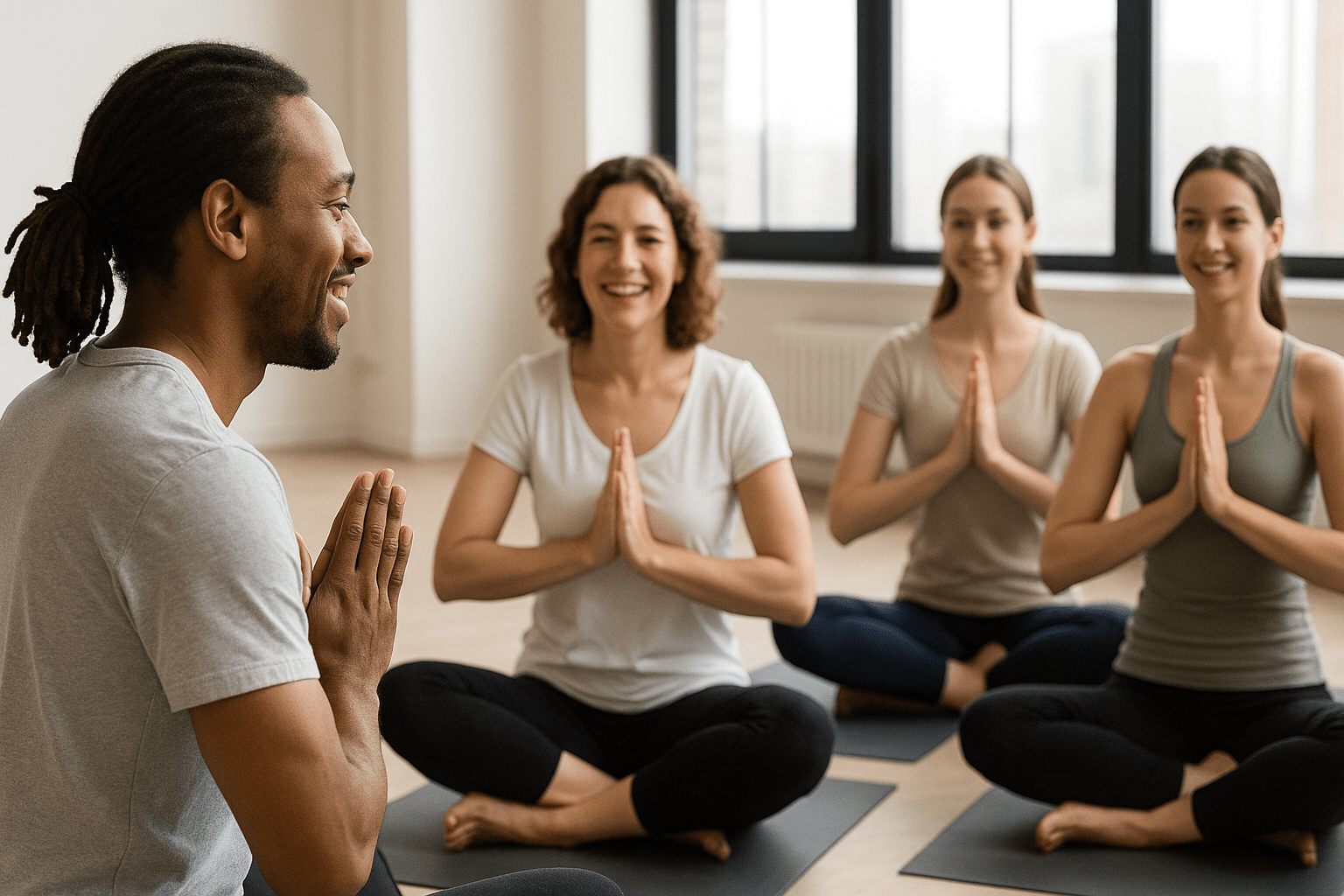
Think about it. You’ve probably seen it: the ultra-still posture, the knitted eyebrows, the strained silence, and the unspoken pressure to “be spiritual.” Somewhere along the way, many yoga instructors and students began treating meditation like a rigid, solemn ritual. But here’s a surprising truth: the essence of teaching meditation isn’t seriousness—it’s playfulness.

Yes, laughter. Lightness. Curiosity. The kind of childlike wonder that doesn’t demand enlightenment but dances with it.

At Online Yoga Life, we train yoga teachers not just to sit in stillness, but to embrace life’s joyful rhythm—and that includes teaching meditation from a place of freedom, not force. If you’re enrolled in or considering one of our yoga training courses, read on: this blog may just shift your entire approach.


Laughter: The Forgotten Tool in Teaching Meditation

Close your eyes. Now smile. No, not the polite, photo-smile. A real one. The one that bubbles up when your best friend makes a ridiculous face. Feel that? That shift?

That’s the meditative state sneaking in from the back door.

We often overlook the simple power of laughter, yet it’s profoundly meditative. Why? Because in that moment of laughter, the mind stops. The thinker is paused. The burden of identity drops, and presence enters.

If you’re guiding others through meditation—or plan to with our teacher training—you must know: laughter isn’t a distraction from meditation. It’s a gateway.


Meditation Is a State, Not a Performance

One of the most common misconceptions among new yoga teachers is that meditation is something you do. But at Online Yoga Life, we emphasize this: Meditation is not something to perform; it is something to fall into.

When you’re too serious, trying to ‘do it right’, you’re adding layers to the mind. But laughter strips them away. It doesn’t aim for transcendence—it tumbles into it. That’s why in our yoga training courses, especially the modules on teaching meditation, we encourage instructors to play with meditation, not control it.

It’s a radical idea: teaching meditation doesn’t mean teaching silence. It can mean teaching joy, movement, even giggles.


The Spiritual Wisdom of Clowns and Children

Let’s get honest. Who seems more alive: the rigid meditator trying not to scratch their nose, or the kid dancing in the rain, laughing like a maniac?

Truth bomb: Children and clowns may be more meditative than most “serious seekers.”

They are in the moment, fully immersed, with no ego story running in the background. As a yoga teacher, this is a precious insight. It tells you that your job when teaching meditation isn’t to “get people quiet.” It’s to help them drop effort, drop seriousness, and come into presence—however it arises.


Try This in Your Next Session: The Laughing Sit

Here’s a playful practice we share in our teacher training course:

The Laughing Sit
– Invite students to sit comfortably.
– Ask them to smile. Yes, fake it if needed.
– Now begin with a gentle chuckle.
– Let it grow, even if it feels silly.
– Encourage full-bodied laughter.
– After 2–3 minutes, let the laughter fade.
– Sit in silence for a minute or two.

Notice what happens.

The silence after laughter is different. It’s deeper. More natural. And this, dear teacher, is your doorway to teaching meditation without teaching effort.


Why Seriousness Blocks Meditation

Let’s break it down simply:

  1. Seriousness = Mind.
  2. Playfulness = No-Mind.

When we are too serious, we are in the head—judging, planning, expecting. But meditation is the art of being here and now, without the noise. Laughter brings you back here, playfulness melts the armor.

We’ve seen this transformation in so many students in our yoga training courses. Once they let go of “doing it right,” they finally drop into the meditative state. And guess what? Their teaching becomes magnetic.


Teaching Meditation as a Living Art

When you become a meditation teacher, you’re not delivering a lecture—you’re creating space for discovery. And no discovery happens where fear, performance, and tension exist.

In our Online Yoga Life meditation course, we equip teachers with tools to create that space. From ancient kriyas to creative silence techniques—and yes, laughter sessions—we help you explore the full palette of teaching meditation.

Because the world doesn’t need more robotic teachers. It needs playful ones, real ones. Teachers who can laugh with their students, cry with them, and gently hold space without pretending to be perfect.


Your Invitation: Drop the Act, Share the Joy

So here’s your reminder: meditation is not a badge. It’s not a competition. And it certainly isn’t about looking wise while sitting in lotus for Instagram.

Meditation is being real. And sometimes being real means laughing so hard you snort, then sinking into silence with tears in your eyes and joy in your heart.

That’s the kind of teacher we want to train at Online Yoga Life. That’s the kind of teaching meditation we believe in.

If that calls to you, explore our yoga training courses and meditation certification programs. You don’t need to be serious to be spiritual—you just need to be present. And sometimes, the fastest way to presence is a good, full-hearted laugh.


Ready to Laugh Your Way into Stillness?

If you’re a yoga instructor ready to shift how you view and share meditation, we invite you to explore our approach. Our online teacher training course doesn’t just teach you the techniques—it teaches you to be the meditation. Light, alive, playful.

Because in the end, meditation isn’t about becoming someone else. It’s about becoming nobody—and laughing all the way there.

meditation, yoga teachers

Why Meditation is Not a Practice But a State of Being – A Guide for Yoga Teacher

Kritika Bairagi | May 20th, 2025


Meditation Isn’t a Practice – It’s a State,

Why Every Yoga Teacher Needs to Reconsider Their Method on Meditation

Here’s how we can start with a provocative statement: Meditation is not something you do.
It’s something you become.

If you’re a yoga teacher or training to become a teacher, you’ve probably heard—and perhaps even taught—the words “Let’s start our meditation practice.” But listen carefully: the more deeply you delve into yogic knowledge, the more you see that meditation isn’t a practice—it’s a state. And that fundamental shift in awareness upends everything.

At Online Yoga Life, we created our online meditation course with this same awareness at its foundation. It’s time to get past the surface techniques and into the experience of meditation itself. Because if you’re a teacher, you have to go beyond teaching techniques—you have to be in the state.


The Common Mistake Teachers Make


Most yoga instructors, particularly new ones, catch themselves treating meditation as a breathing exercise or checklist.

Sit cross-legged

Close eyes

Focus on breath

Done.

Meditation is not the next thing after pranayama. It’s not something you achieve through effort. And it’s definitely not about making the mind go quiet.

In our online meditation course, we train teachers to end “doing” meditation and instead get ready for the state where meditation occurs. This is the idea of classical yoga. This is what Patanjali suggested within the Yoga Sutras—that Dhyana (meditation) is the result, not the doing.


The State of Stillness


True meditation is the byproduct of inner calm—when the mind becomes so refined, so still, that awareness naturally settles into itself. It’s effortless. And that’s a word that many teachers are terrified of.

“Effortless? But I have to teach people how to meditate!”

And that’s why a quality online meditation course should teach you how to set up the conditions in which meditation occurs—not just how to guide a script.

Think of it in terms of sleep. You can’t “do” sleep. You recline, turn out the lights, perhaps relax your breath—and then sleep arrives. Meditation is much the same. You set up the body, the breath, the mind—and meditation arises.

Also read: The Subtle Body: Learning in Yoga Nadis, Chakras, and Koshas

meditation-not-a-practice-guide-for-yoga-teachers

Why This Matters for Teachers


As a yoga teacher, you are not only teaching physical postures. You’re providing an entry into inner peace. But here’s the reality:

You can’t teach meditation if you’ve only learned the methods.
You need to touch the state yourself.

That’s why our online meditation course is unique. We’re not here to hurl more techniques at you. We’re here to guide you into settling into your own awareness—to teach you the subtle nuance between effort and surrender.

In our course, you’ll learn how to:

Identify the difference between concentration, contemplation, and real meditation

Lead your students into inner awareness without over-teaching

Let go of effort without letting go of presence

Nurture the quality of being that allows meditation to naturally occur.


Meditation Off the Cushion


Meditation too frequently gets relegated to a 10-minute morning practice or an app session. But for yoga teachers, meditation must become interwoven into life.

It’s the way you teach.
It’s the way you listen.
It’s the way you are—grounded, still, present.

Within our online course on meditation, we really focus on this integration. You’ll learn how to bring the meditative state into teaching, speaking, even commuting. And when you do that, your students don’t just hear what you say—they sense your presence.


A Course Built for the Inner Teacher


If you’ve been teaching yoga but find yourself missing something—like you’re leading others to peace but haven’t actually arrived there yourself—this is your invitation to dive deeper.

The online meditation course at Online Yoga Life is not just a curriculum. It’s a transmission. It’s where the techniques melt away and the true teacher within you is awakened.

Directed by skilled yogis grounded in the classical tradition, such as wisdom from Dr. Radheshyam Mishra, our training carries you beyond trendy fads to ageless insight.

You’ll learn:

  1. Meditation as presented in the classical yogic literature
  2. The use of silence, stillness, and letting go
  3. Diet and lifestyle conducive to meditative awareness
  4. The anatomy of meditation energy (chakras, nadis, and flow of prana)

How to lead students from outer noise to inner stillness

And yes, you’ll receive certification that recognizes your deepened ability to teach meditation—not just as a method, but as a state.

meditation, online course, yoga teachers

From Doing to Being


When meditation becomes a practice, it often turns into performance. “I meditated today” becomes a badge, a box to tick, an achievement.

But when you are a state, you cease to count minutes and feel moments instead. You become present in your teaching. You shift from practicing yoga to becoming Yoga.

Our online meditation course is not about getting another certificate to hang on your wall. It’s about being the kind of teacher who embodies stillness so thoroughly that students can sense it just by sitting in your proximity.

Ready to Teach from the State of Meditation
If you’re sick of surface level practice…
If you’re willing to end the doing and just be…
If you want to teach from presence rather than pressure…

Then our online meditation course is waiting for you.

Go to www.onlineyogalife.com to start. Release the “doing.” Enter the state.

Because meditation is not a practice.
It is a state.
And it’s time to live it. Namaste! 🧘‍♂️✨


yoga instructors yoga teacher training online meditation course teacher training course in meditation going beyond the mind mind as the problem meditation for yoga teachers certified meditation teacher yoga for mental wellness Online Yoga Life

5 Truths Yoga Teachers Must Know About the Mind

Kritika Bairagi | May 19th, 2025


Why Yoga Instructors Need to Know About the Mind in Order to Teach Meditation Successfully

Let’s be honest, most of our daily struggles don’t come from the outside world. It’s not traffic, your job, or even the people around you. It’s the overthinking, the self-doubt, the noise in your head that never seems to stop. As a yoga instructor, you’ve probably seen this in your students too—beautiful souls stuck in cycles of anxiety, frustration, or burnout. And if you’ve ever felt it yourself, you’re not alone.

The mind can be the greatest obstacle—but it’s also the greatest key. With Yoga and particularly meditation, we don’t cure the mind—we go beyond it.

In our yoga teacher training courses online, particularly the meditation module, we explore this incredible truth in depth. Because as yoga teachers and future trainers, knowing the mind isn’t theory—its the essence of teaching change.


The Mind: Master or Servant?


Here’s the thing—your brain is a very effective tool. It thinks, it evaluates, it dreams. But when it gets into autopilot mode, telling you what to feel, how to react, who you are, it becomes a prison. You begin to accept every thought that comes your way. “I’m not good enough.” “What if I fail?” “I need to control everything.”

As yoga teachers, we need to first acknowledge this in ourselves before we can assist others. If you’re teaching meditation, and your mind is still the boss of you, then chances are your students will pick up on it. They won’t resonate with the silence you’re talking about, because you haven’t experienced it yet.

That’s why within our Yoga and Meditation Teacher Training Course, we do not only delve into the techniques, but also the deeper levels of awareness, detachment, and inquiry.


What Does “Going Beyond Mind” Really Mean?


Let’s get one thing straight—it doesn’t mean destroying the mind. It means disidentifying with it. Currently, you likely tell yourself things like “I’m stressed,” “I’m thinking,” “I’m overwhelmed.” But take a closer look, isn’t it just the mind doing its job?

Yoga teaches us that you are not the mind. You are the witness of the mind.

This idea shows up in ancient yogic texts and teachings, especially in Raja Yoga, the Yoga Sutras of Patanjali, and Jnana Yoga. At our center, founded by Dr. Radheshyam Mishr, we’ve spent decades helping students shift from “I am the mind” to “I observe the mind.” That’s where freedom begins.


Why Yoga Instructors Must Understand This Firsthand


If you’re a yoga teacher or wanting to be one, and intend to teach meditation, then this isn’t something you do, it’s a must. Students don’t only learn from your words. They sense your presence. If your inner space is messy, they won’t feel comfortable to venture into their own.

That’s exactly why in our Online Yoga Life Meditation Course you won’t just learn to teach meditations. You’ll practice every day, introspect profoundly, and face the mind’s tendencies with kindness and bravery. You’ll shift from being a teacher who guides meditations to a guide who lives them.

This is particularly relevant if you’re working towards certification as a meditation teacher or if you plan to teach genuine meditation in your classes. Surface-level methods won’t cut it. Students are hungry for depth, clarity, and truth.


Practical Insights from the Training: Beyond the Mind


Here’s a glimpse at what our course assists yoga teachers to navigate through:

Observation, Not Suppression: You’ll discover the way to observe the mind like a sky observes clouds—peaceful, clear, unmoving.

Silence as a Tool: Not uncomfortable silence of attempting to be spiritual. Genuine inner silence which your students will sense even if you don’t say anything.

Inquiry over Instructions: Meditation teaching isn’t about eloquent words. It’s about questioning the right ones: “Who is thinking this thought?” “Who is present at the moment?”

Real Practice: Meditations every day, awareness exercises, reflective journaling. Because theory without practice is like a yoga mat never unrolled.


Beyond Mind Is Where Healing Begins


Let’s take a pause. Consider one student in your class who is having an emotional struggle—someone who tells you they can’t shut off their thinking or feels lost. Now imagine them being taught to observe their mind, not be controlled by it. Imagine them having room inside for the first time in years.

This is what you can offer them.

But only if you’ve gone there first.

And that’s why our yoga and meditation teacher training online isn’t merely certification—transformation. For you, and for your students.


From Teacher to Inner Guide


Yoga is not merely about stretching the body; it’s about opening awareness. As a yoga teacher, your greatest responsibility isn’t showing off the ultimate pose—it’s helping others turn within.

The more profound your grasp of the mind, the more effective your classes will be. Whether you’re teaching a complete yoga class or a 10-minute meditation, your lucidity will illuminate the way.

When students feel your calm, they’ll begin to trust theirs too. When you release identification with the chatter in your mind, you’ll help others release it as well.


Ready to Go Beyond?


If you’re ready to take your journey deeper, enter a greater level of teaching, and live meditation as a living practice, not a means to an end—join us at Online Yoga Life.

Our Meditation Teacher Training Course is intended for yoga teachers and dedicated seekers who wish to comprehend the mind, transcend it, and teach others through that same realization.

👉 come visit www.onlineyogalife.com to discover our teacher training programs, learn from lineage-based wisdom, and revolutionize how you teach meditation—from the inside out. Namaste!🧘‍♂️✨

ChatGPT Image May 19 2025 12 50 29 PM Online Yoga Life

Meditation , Yoga , Observer

Not Your Mind, Not Your Thoughts – So Who Are You?

Kritika Bairagi | April 23rd, 2025


Who’s Really Meditating?
Let’s sit with a simple question: Who is meditating?

Really, no. Who’s observing your breath? The one attempting to concentrate? The one who becomes sidetracked and then regains focus? It may seem a bit… strange to ask this question. Perhaps even bothersome. But stay with me—it could change your perspective on meditation forever.


This is how it begins…


On your mat, you are seated. It might be early in the morning or the end of a long day. You close your eyes and start to concentrate. on the breath. Regarding the noises. On the quiet. And in a matter of seconds, ideas enter like unexpected visitors. A list of things to buy. You heard that last week. Suddenly a song lyric.

Then, if you’re lucky, you see it taking place. “Oh wait, I’m thinking again,” you realize.


However, who is observing that?

Behind the thoughts, the observer
This is the best part.

Your thoughts are not who you are. You’re not even attempting to control your thoughts. It’s all being watched by you.

It’s similar to being in a movie theater. The thoughts are vivid, dramatic, and intense like the film on screen. However, you are the one who is observing the movie from a distance. The issue? The majority of us forget we’re seated. We become engrossed in the story. We take on the roles of protagonist, antagonist, and composer. We become so engrossed that we lose sight of the audience.

The key to effective meditation is to keep in mind that you are the one observing.

“But I don’t understand.”
Completely reasonable. It’s an odd idea.

Let’s use another example: Have you ever held another mirror behind you while gazing into a mirror? You see yourself reflected in your reflection, which reflects you, and so on. When you begin to observe the observer, it may feel like that. Strangely liberating, but also a little psychedelic.

You’re entering a realm where you can truly see what’s happening, rather than merely responding to life. from afar. A little clearer.

This has nothing to do with dozing off. It involves focusing so intently that you become conscious of your own consciousness. And wow, from that space. Magic occurs.


Benefits in real life (not only woo-woo content)


Let’s be honest. Life is a mess. More than ever, our thoughts are loud. There is a lot of stress from work, personal concerns, and phone notifications. However, things slow down when you learn to enter that inner observer’s space. You begin to respond instead of react. You are calmer, not just that you feel calmer.

Imagine that you are sitting on the hill, watching the storm pass, rather than in the storm itself. Even the loudest thunder doesn’t tremble you as much up on the hill when you’re there.

Then, how can we “observe the observer”?
It’s easy, but not always.

You sit first. No plans. No objectives. Simply sit. Pay attention to the breath.

Next, observe the person observing the breath. It may sound ridiculous, but give it a shot.

“Who is noticing this breath?” ask yourself.
Then allow the question to fade. Whatever comes, sit down.

There is no pressure. No flawless responses. Just taking note. Taking note. Existing.


The “trying too hard” trap


Many people (yes, even experienced practitioners) make mistakes with this. We make an effort to compel meditation. Make an effort to get somewhere. Aim for a “deep experience.” However, that is just another mental trick. The observer makes no attempt. It simply is.

And when you realize you’re making an effort? That’s acceptable as well. Simply take a step back. Look at the person making an effort. Do you see where this is going?

To be honest, it’s kind of funny. All of us are merely layers of thought and work, but underneath it all, something remains. Something quiet. The true meditator is that.

meditating, teaching yoga

Here’s what yoga teaches us


This is the core of true dhyana (meditation) in classical yoga, yes, the kind we study in our teacher training course. It’s not about zen music or pretty poses. It involves removing the layers. locating that silent observer.

In the Yoga Sutras, Patanjali discusses this. The goal of the practice is to calm mental turbulence so that the seer can remain true to itself. “Stop getting lost in the noise, and remember who you really are” is what that fancy yogic phrase means.

What about our training? Understanding yoga is more important than simply practicing it. profoundly. In a genuine way. You will acquire the necessary tools to investigate this particular matter. Not only for yourself, but also so that you can mentor others.


Let’s be honest.


You may sit and feel like a monk on certain days. Calm, motionless, nearly radiant.

On other days? Your brain will feel like it’s running on high speed.

Both are doing well. Really.

Perfection is never the aim. It’s there.

You can watch it even if your mind is racing. The practice is that observation. The gold is that.


Concluding remarks (well, for now)


This route? It’s not a straight line. It’s not always spotless or suitable for Instagram. However, it is real. It is a human. It is living.

And if you have ever questioned whether meditation is “working” for you, perhaps the answer lies in this: Who is it that is asking?

Check out our teacher training course if you want to delve deeper into this practice, learn how to observe the observer, and teach others how to do the same. Though designed for everyday life, it is based on the wisdom of tradition. for your own life.

We maintain realism, personalization, and groundedness.

Visit onlineyogalife.com to join us. It is better to walk this path together.

Observing, meditating

meditation, yoga teachers, guide

Meditation for Yoga Teachers: Purpose, Practice, and Relevance Today

Kritika Bairagi | April 21st, 2025


Goals and Significance in the Present Era

Let’s face it, what does the term “meditation” conjure up for you?
A mountain monk? A quiet room with a perfectly lit candle? Or simply the idea that “I can’t sit still for five minutes!”

Regardless of your affiliation, meditation has become a common topic of discussion, and with good reason. However, its origins, function, and strength are much more profound than the popular mindfulness applications or breathing GIFs that you see on your feed.

So let’s take a moment to slow down and investigate: Really, what is meditation? And why is it so important now?


The Yogic Definition of Meditation: It’s Not Just Sitting Still


Meditation in the yogic tradition is more than just mental relaxation. It isn’t a task. It’s not a quick-fix method you use after a stressful day. It is a state of being—a state that naturally occurs when the mind is calm, concentrated, and unaffected by outside influences.

The seventh limb of the eightfold path of yoga (Ashtanga Yoga) described by Sage Patanjali in the Yoga Sutras is known in Sanskrit as Dhyana. Before achieving Dhyana, a practitioner establishes a strong foundation: physical discipline (Asana), breath control (Pranayama), withdrawal from sensory distractions (Pratyahara), focused concentration (Dharana), and ethical living (Yama, Niyama).

Therefore, meditation is the blossoming of an entire way of life, not the beginning.


But Hold on… Why Practice Meditation Now?


The modern world is noisy, let’s face it. Social media rabbit holes, deadlines, notifications, and the constant sense that you need to do more. Our minds are now overburdened, underrested, and pulled in a hundred different directions all the time.

At this point, meditation becomes not only beneficial but also necessary.

This is the reason:

  1. Mental Acuity in a Noisy Environment
    The fog is lifted by meditation. It allows your overthinking mind to relax. Frequent practice improves perception, decision-making, emotional response, and thought clarity.
  2. Reactivity, Not Stress, Is the Enemy
    There will always be stress. Meditation alters your relationship with it. You can change the way you handle life’s obstacles by taking a few minutes each day to sit in awareness. Reduced impulsive responses. more realistic answers.
  3. Self-Reconnection
    We’ve become adept at keeping in touch with the outside world, but we’ve lost touch with ourselves. That silent reunion is meditation. A place where you can reconnect with yourself without the distractions, filters, or expectations.
  4. Better Sleep, Emotional Well-Being
    It’s more than just spiritual. The benefits of meditation are real; it has been shown through science to lower anxiety, increase emotional resilience, and improve sleep. It’s similar to mental housekeeping.

Also read: Consistency in Yoga: The Real Secret to Growth for a Yoga Instructor


How Do You Begin? Hint: It’s Not as Hard as You Think


You don’t need incense or a Himalayan cave, but feel free to use them if you so choose. The first step in meditation is paying attention. Just one breath. A single flash of insight. When your thoughts stray, make a gentle return.

Here are some guidelines for novices:

Start Small: You can develop the habit in as little as five minutes each day.

Select a Focus: Anything to focus your attention, such as a candle flame, a mantra, or your breath.

Don’t Fight the Mind: Having thoughts is normal. Return to your main focus with gentleness.

Be Consistent: Regularity, not length, is what makes a difference.


A Timeless Habit for a Timeless You


According to yogic philosophy, meditation should aim for liberation rather than merely relaxation. It serves as a gateway to truth, tranquility, and inner freedom. An internal journey that uncovers the silence that always existed beneath the cacophony.

And that stillness may be the most necessary and rebellious thing you can cultivate in today’s world, where everything is external, fast-paced, and competitive.


Concluding remarks


The next time life seems too much, too loud, or just plain overwhelming, keep in mind that you have something old, strong, and transforming inside of you.

Being flawless is not the goal of meditation. It all comes down to showing up. taking a seat. Inhaling. listening. Going back. Again and again.

It’s a conscious dive into life rather than an escape from it.

Do you want to delve further? Check out our online teacher training program if you’re interested in learning about the Yogic path in all of its facets, including breathwork, meditation, philosophy, and therapeutic techniques.

Our course helps you experience meditation not just as a practice but as a way of being, regardless of whether you’re aspiring to teach yoga or you just want to incorporate yogic wisdom into your life.


yoga teacher, meditation

How to Guide Students Through Meditation as a Yoga Teacher?

Kaushik Mehra | February 24th, 2025

How to Guide Students Through Meditation as a Yoga Teacher?

Meditation is an essential part of yoga practice, helping students cultivate mindfulness, inner peace, and emotional balance. However, many students struggle to quiet their minds and remain present during meditation. As a yoga teacher, your role is crucial in guiding them through this process, making it accessible and effective. Knowing how to create the right atmosphere and use the correct techniques can transform a student’s meditation experience, enhancing their overall yoga journey.

The Basics of Meditation

Meditation is more than just sitting quietly, it is a structured practice that enhances focus and awareness. In yoga, meditation complements physical postures by training the mind to remain centered. The benefits extend beyond the yoga class, improving concentration, reducing stress, and boosting emotional resilience. Common meditation techniques include breath awareness, guided visualization, chanting, and mindfulness. Understanding these methods helps a yoga teacher choose the most suitable approach for their students.

Preparing Students for Meditation

Creating the right environment is the first step in leading a successful meditation session. A calm, clutter-free space with minimal distractions sets the tone. Dimming the lights and using soft background music can enhance relaxation. Before starting, encourage students to find a comfortable seated position, ensuring their posture supports deep breathing. Introducing a few gentle stretches beforehand can also prepare the body for stillness. A yoga teacher should guide students to take slow, conscious breaths, allowing them to ease into the practice.

Guiding Students Through the Meditation Process

Effective verbal cues play a vital role in leading meditation. A yoga teacher should use a soothing tone and speak slowly to encourage relaxation. Beginning with breath awareness helps students anchor their focus. Asking them to observe each inhale and exhale without control assists mindfulness. In guided meditation, visualization techniques can enhance engagement. Describing a peaceful setting, such as a serene beach or quiet forest, helps students immerse themselves in the experience. Mantra chanting is another powerful method, where repeating a word or phrase maintains concentration. Throughout the session, reassurance is key—remind students that wandering thoughts are normal and gently guide them back to the present moment.

Handling Common Challenges in Meditation Sessions

Many students find meditation challenging, often experiencing distractions, restlessness, or difficulty maintaining focus. A yoga teacher must acknowledge these struggles and provide solutions. If students feel restless, encourage them to shift their attention to their breath or physical sensations. For those battling racing thoughts, suggest using a mantra or counting breaths as an anchor. Beginners may struggle with long meditation sessions, so starting with shorter durations and gradually increasing them can help. If a student feels overwhelmed, remind them that meditation is a practice, and progress comes with consistency.

yoga teacher, meditation

Ending the Meditation Practice Mindfully

Closing a meditation session is just as important as starting it. A yoga teacher should guide students to slowly bring awareness back to their surroundings. Encouraging gentle movements, such as wiggling fingers and toes, helps transition out of stillness. A moment of gratitude or reflection can deepen the experience, allowing students to absorb the benefits of their practice. Ending with a short discussion or journaling exercise can help students process their thoughts and integrate meditation into their daily lives.

Final Thoughts 

Guiding students through meditation requires patience, clarity, and an understanding of their needs. A yoga teacher is vital in making meditation accessible, helping students build focus and emotional resilience. Meditation can become an enriching part of their yoga journey by creating the right environment, using effective guidance techniques, and addressing common challenges. With consistent practice and support, students will develop a deeper connection to their inner selves, experiencing the profound benefits of meditation in and beyond the yoga class.


Yoga Teacher Training

World Meditation Day: A Moment for Global Stillness and Mindfulness

Kritika Bairagi | December 21st, 2024


Today, World Meditation Day provides us a special chance to pause, reflect, and embrace the profound benefits of stillness. This day, celebrated worldwide, highlights meditation’s amazing impact on our mental, physical, and spiritual well-being. Whether you’re a seasoned meditator or a curious beginner, World Meditation Day is an opportunity to reconnect with yourself and join millions globally in cultivating mindfulness. Let’s understand the essence of meditation in our lives.


In today’s fast-paced, tech-driven world, stress and anxiety have become all too common. World Meditation Day encourages us to take a collective pause, slow down, and center ourselves in the present moment. It’s a celebration of inner tranquility and a reminder that meditation is a powerful tool to navigate the complexities of modern life. By dedicating a day to this ancient practice, we not only honor its rich history but also highlight its relevance in today’s wellness landscape as World Meditation Day.


At its core, Meditation or Dhyana is the practice of focusing the mind to achieve relaxation, clarity, and heightened awareness. It transcends religious and cultural boundaries, making it a universal practice that’s accessible to all. Meditation has been practiced for thousands of years and is deeply rooted in traditions like Yoga, Buddhism, and Taoism. Today, it is globally recognized as an effective method for promoting mental and emotional well-being.


Numerous studies have highlighted the benefits of meditation, including:

  1. Reducing Stress: Meditation lowers cortisol, the stress hormone, and promotes relaxation.
  2. Enhancing Focus: Regular practice improves concentration and cognitive abilities.
  3. Boosting Emotional Health: It fosters emotional resilience and helps alleviate symptoms of depression and anxiety.
  4. Improving Sleep: Mindfulness practices before bed enhance sleep quality and reduce insomnia.
  5. Promoting Physical Health: Meditation can lower blood pressure, improve heart health, and reduce chronic pain.

World Meditation Day celebrates the diversity of meditation practices worldwide. Here are some popular traditions:

Mindfulness Meditation (Vipassana): Originating from Buddhism, it involves focusing on the breath and observing thoughts without judgment.

Transcendental Meditation: This technique uses a mantra to help practitioners transcend ordinary thought.

Loving-Kindness Meditation (Metta): Rooted in Buddhist traditions, it cultivates compassion and love for oneself and others.

Zen Meditation (Zazen): A practice from Zen Buddhism that emphasizes seated meditation and thought observation.

Chakra Meditation: Often practiced in Yoga, this focuses on balancing the body’s energy centers.


1. Start with Guided Meditation

If you’re new to meditation, guided sessions are an excellent way to begin. Apps like Headspace, Calm, or YouTube videos provide step-by-step guidance. For experienced meditators, this is a chance to deepen your practice.

2. Join a Group Meditation

Many wellness centers and organizations host group meditation events on this day. Participating in a collective meditation can foster a greater sense of connection and purpose.

3. Meditate Outdoors

Practicing meditation in nature, surrounded by its calming sounds, can enhance the experience. Find a peaceful spot in a park or garden and connect with the natural world.

4. Share the Experience

Invite friends and family to meditate with you. Sharing this practice can inspire others to incorporate mindfulness into their lives.

5. Reflect on Your Journey

Use this day to journal about your meditation journey. Reflect on how the practice has impacted your life and set intentions for the future.

WORLD MEDIDTAION DAY 1 Online Yoga Life

Meditation complements Yoga’s physical postures (Asanas) by fostering mental stillness. At Online Yoga Life, we focus on integrating the body, mind, and spirit through holistic Yoga practices. Our online teacher training course incorporates meditation techniques to empower aspiring teachers to guide their students toward overall wellness.

Some Yoga-inspired meditation practices include:

Pranayama (Breath Control): Breathing exercises that calm the mind and enhance focus.

Yoga Nidra (Yogic Sleep): A guided meditation that promotes deep relaxation.

Trataka (Candle Gazing): A meditation technique to improve concentration and mental clarity.


Meditation doesn’t have to be time-consuming. Here are simple ways to integrate mindfulness into your daily routine:

Morning Routine: Start your day with 5-10 minutes of meditation to set a positive tone.

Mindful Eating: Practice awareness while eating, focusing on each bite and savoring the flavors.

Commute Meditation: Use travel time to listen to guided meditations or practice deep breathing.

Evening Wind-Down: Meditate before bed to release the day’s stress and prepare for restful sleep.


Although meditation encourages disconnecting from technology, digital tools have made it more accessible than ever. Apps and online platforms offer valuable resources. At Online Yoga Life, we provide online classes and teacher training programs to help you incorporate meditation into your lifestyle.


On World Meditation Day, imagine the impact of millions meditating simultaneously. This collective stillness benefits individuals and fosters a sense of unity and peace. It’s a reminder that despite our differences, we all share a need for inner harmony.


Celebrate World Meditation Day with Online Yoga Life by embracing the transformative power of meditation. Whether you’re looking to deepen your practice, become a teacher, or simply explore mindfulness, our programs are designed to guide you every step of the way.

Take a moment today to breathe, reflect, and reconnect with yourself. Let’s honor this day together and make meditation a cornerstone of our wellness journey.

yoga therapy 1 1 Online Yoga Life

Would you like to explore our online teacher training course more or join a meditation session? Visit www.onlineyogalife.com to start your journey to mindfulness. Namaste!